Snake Plant Care Guide
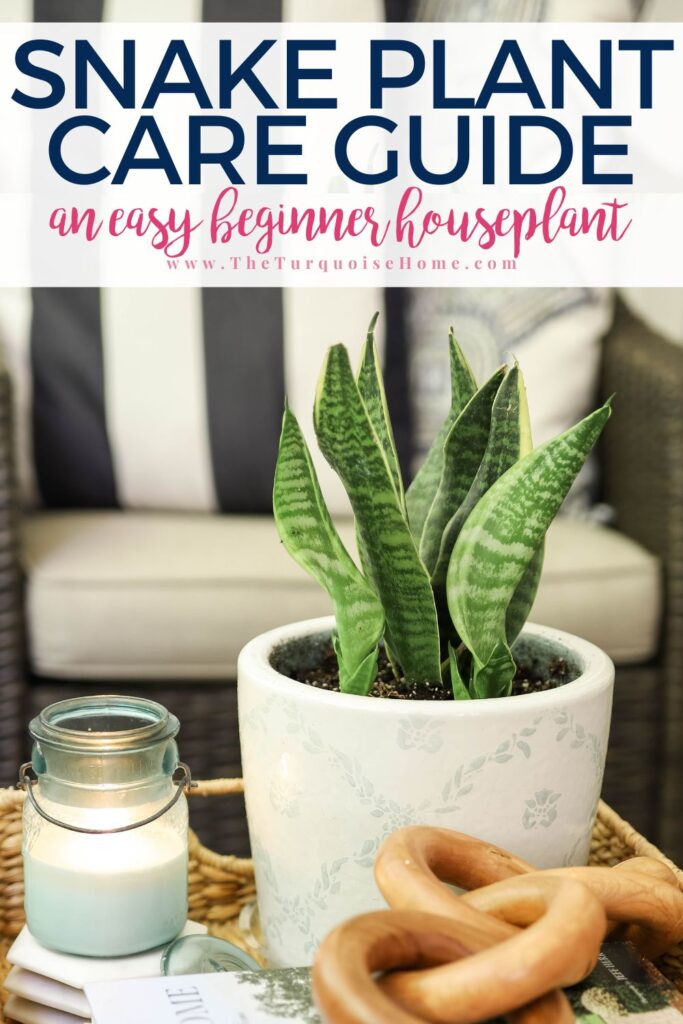
I’ve long praised the charms of the snake plant. Known for low maintenance and hardiness, snake plants still need a bit of know-how to live their best plant lives in your home. It is one of my top three easiest house plants I am expanding upon, giving you more helpful details about snake plant care.
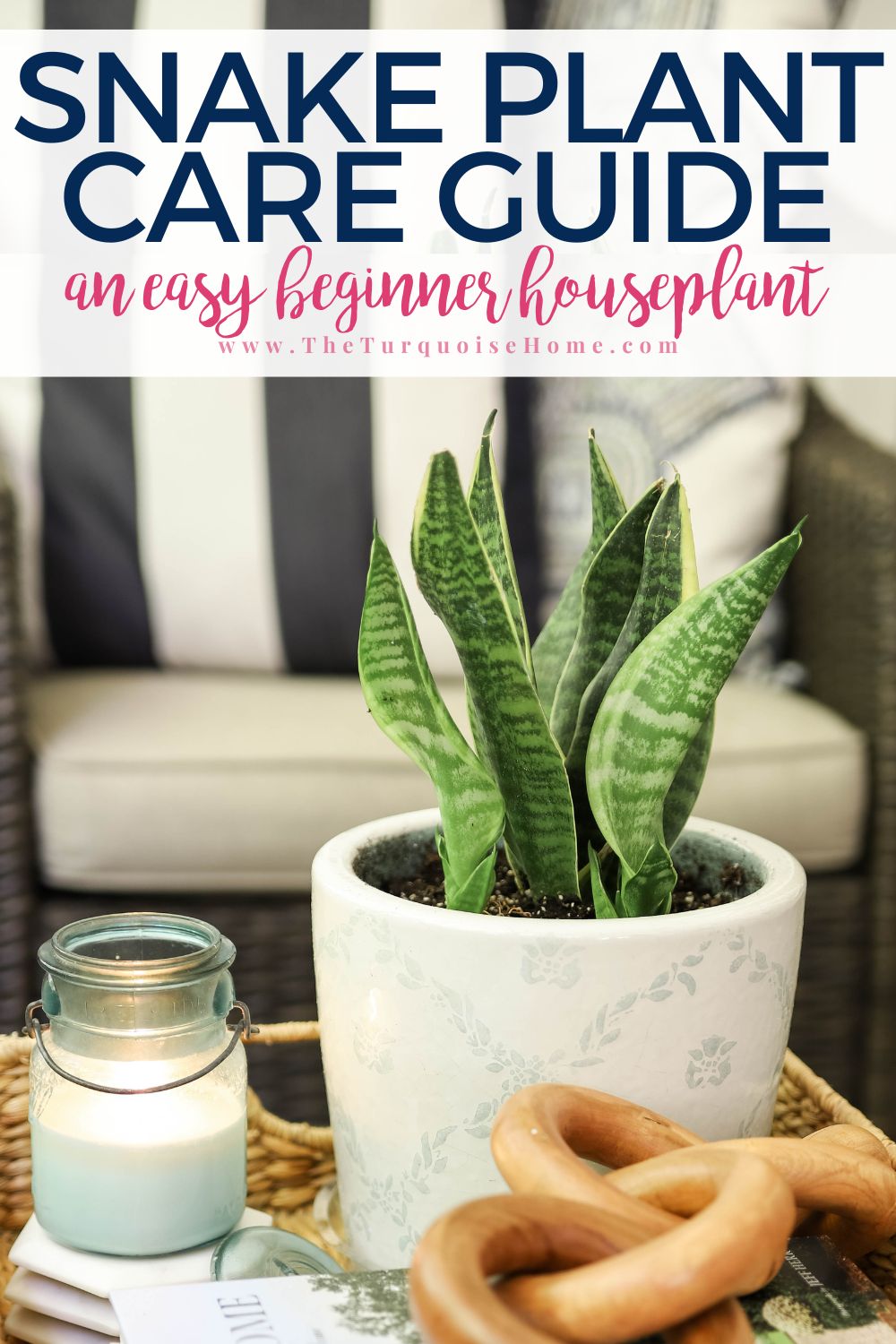
The snake plant’s scientific name is Sansevieria trifasciata and the non-scientific nickname is mother-in-law’s tongues. They’re also sometimes called viper’s bowstring hemp because their fibers were once used to make bow strings.
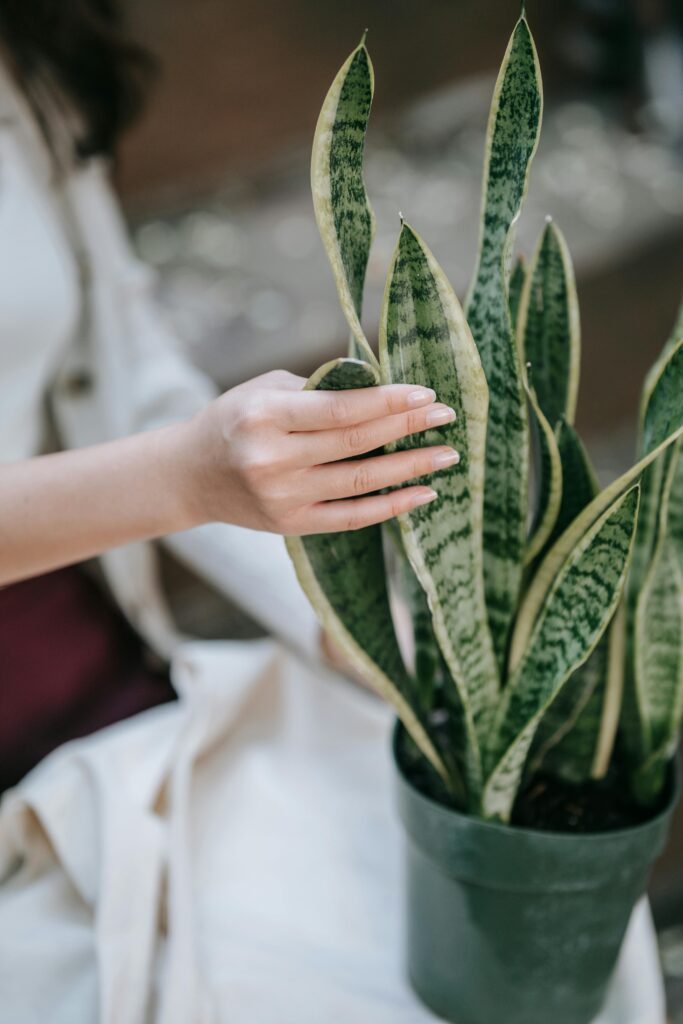
These beautiful houseplants can get quite large and have long, stiff, and pointed leaves that grow vertically.
I personally love this beautifully structured plant that is so easy to care for. I received one at my grandfather’s funeral, but sadly I left it outside during the winter and it died. So while it may be easy to care for, don’t make the same mistake and leave it outside when it’s below freezing. I bought another one and keep it inside for most of the year!
Benefits of Snake Plants
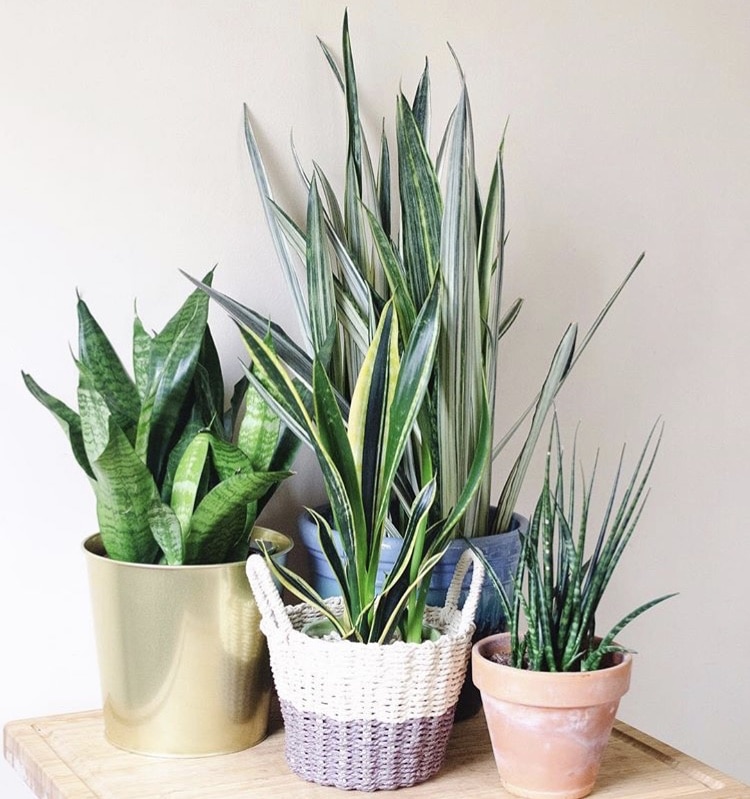
- Beautiful: These plants can get quite large and have long, stiff and pointed leaves that grow vertically. They typically have dark green leaves with lighter green or white vertical stripes or horizontal bands.
- Versatile: Snake plants’ shape along with their many varieties, and colors make a striking impression when placed in just about any interior design style.
- Easy: While most people include snake plants in their top picks for easy houseplants, they are among the best of the best in how hard they are to mess up.
- Purifying: I learned today that the snake plant is unique in that it continues releasing oxygen even at night. Other plants release carbon dioxide when they lack light for photosynthesis. Snake plants have a special metabolic process that makes them different.

The Many Varieties of Snake Plants
When I consider the many benefits of these plants, my favorite has to be the variety you can find. That gives you so many options in choosing the plant (or plants!) to suit your style. Below are some of the most popular varieties of snake plants with a little info about what makes each one different.
- Sansevieria Laurentii: This variety features narrow leaves with white vertical stripes and can grow up to 3 feet tall.
- Sansevieria cylindrica: Also known as African Spear, this variety is an evergreen succulent with unique, round-shaped leaves that grow from a basal rosette up to 6 feet tall! These usually have horizontal banding on the leaves.
- Golden Hahnii aka bird’s nest snake plant: This one has a compact, nest-like shape and golden-yellow stripes.
- Twisted sister aka gold twist: This variety has twisted, spiral leaves that give it a unique appearance.
- Black gold: A dark-leaved variety with gold edges.
- Black robusta: Another dark-leaved variety with a robust, sturdy appearance.
- Futura superba: This one has broad, dark green leaves with light green stripes.
- Black dragon: A stunning variety with deep purple-black leaves.
- Black jack: Similar to Black Dragon, this one also has very dark, almost black leaves.
- Bantel’s sensation: This variety has striking white vertical stripes, giving it a zebra-like look.

How to Propagate Snake Plants from Leaf Cuttings
Now you know about the many options, I bet you want more than one! Here’s the great thing about that: Propagating snake plants from leaf cuttings is also easy! It’s a simple and affordable way to increase your collection by sharing and swapping with friends.
Here are the simple steps to follow for using the water propagation method on a snake plant leaf cutting:
- Choose a mature, healthy leaf.
- Cut the leaf near the soil line using clean scissors or a sharp knife.
- Cut the leaf into at least three-inch sections, paying attention to keep them right side up.
- Cut a V-shape into the bottom of each section.
- Place the cut ends of the leaf sections into a glass jar or dish filled with a couple of inches of clean water.
- Put the jar in a bright spot, but avoid direct sunlight.
- Once a week, rinse the jar thoroughly and change the jar.
- Within three or four weeks, you’ll see roots developing.
- Plant the cuttings in separate pots with potting soil.
- Watch for new growth to emerge.
How to Care for Snake Plants
From when to water to where to place them, here’s a rundown of all you need to know to help your snake plant thrive.
Snake Plant Light Requirements
Snake plants are known for their adaptability to just about any light condition you throw at them. They tolerate low light just fine but will not grow as fast or tall. On the flip side, snake plants can handle some direct sunlight but not for a long time—the leaves can burn. Artificial light like fluorescent bulbs or LED grow lights also work fine with a consistent light schedule to emulate nature.
Ideally though, snake plants like indirect light the best. Indirect sunlight or filtered light gives them just enough to grow the most and stay pretty.
Are Snake Plants Safe for Pets?
No. They are poisonous to pets and, if ingested by people, their toxins can cause nausea, vomiting and diarrhea. These plants are beauties, but you need to keep them far out of reach of your little people and pets.
How many times a week should you water a snake plant?
Snake plants do not need much water and should only be watered every two to six weeks. While that may seem like a big window, it varies depending on how much light it’s getting, the temperature and humidity.
Keep an eye on the soil. If it appears dry, feel the top inch to confirm it is, and then water the plant.
It’s far better to underwater a snake plant than to overwater it, which causes root rot and other problems. Native to West Africa, these plants are naturally drought-resistant and can handle it. In fact, you should purposely reduce the watering during the late fall and winter months. Snake plants need water even less when it’s not their growing season.
What size pot do I need for my snake plant?
Snake plants like to grow slowly in snug quarters. Choose a container that is only about one or two inches wider than the root ball.
When should I repot my snake plant?
Snake plants typically need to be repotted every 2-3 years or when they become pot-bound. You’ll know it’s time for repotting when you notice roots growing out of the pot’s drainage hole or when the plant seems to stop growing.
What type of soil does my snake plant need?
Use a well-draining potting mix like cactus mix or just regular potting soil with added perlite or sand. Also use a balanced liquid houseplant fertilizer about once a month. I prefer Happy Happy Houseplants plant food.
What temperature and humidity work best for a snake plant?
Temperatures between 60-85°F (15-30°C) are ideal as is an average indoor humidity within the range of 40-60%. That said, snake plants are known for their resilience and can handle most conditions outside of these ranges—just not for a long time.
Possible Snake Plant Problems and What to Do
While these hardy houseplants are known for their durability, things happen. Here are a few signs of possible issues and how to solve them if you see them,
If your snake plant is:
- Not growing: That could be from overwatering, not enough light or nutrients, or extreme temperatures. If you suspect any of these are an issue, they’re all fairly simple to solve. Move your plant to try a different light source. Adjust the environment to control temperatures within an ideal range of 60-85°F (15-30°C). If it’s been a long time since you’ve repotted your plant, fresh soil will be welcomed.
- Yellowing and wilting: This can be caused by root rot or by common houseplant pests such as spider mites or mealybugs. If bugs are evident, treat the plant with neem oil. If you suspect root rot, there may still be hope for your plant. Remove it from the pot and shake off the soil to examine the roots. If more than a quarter appear healthy, you’re in luck. Trim away roots that show rot and return the plant to fresh soil in a well-drained pot.
- Blooming: While not a problem necessarily, it’s rare and can be a sign of stress. Snake plants can produce small, tubular white flowers that are followed by orange-red berries, which contain seeds you can use to propagate new plants. The tricky thing is they don’t usually do it unless there’s an issue like being rootbound or not getting enough water.
Essential Houseplant Accessories
And finally, here are a few of my favorite accessories and supplies for houseplant care:
- Happy Happy Houseplant Plant Food
- Self-watering planters … just in case you forget to water each week.
- Bamboo Plant Shelf for the perfectly lit space in your home.
- Soil moisture, light, pH tester is the ideal tool to make sure you get the light and soil conditions just right.
Let me know in the comments if you have other questions about snake plant care. If I don’t know, I will be happy to find out and reply back as soon as I can.
More Posts You Will Love: