
How Chinoiserie Lamps Changed My Primary Bedroom
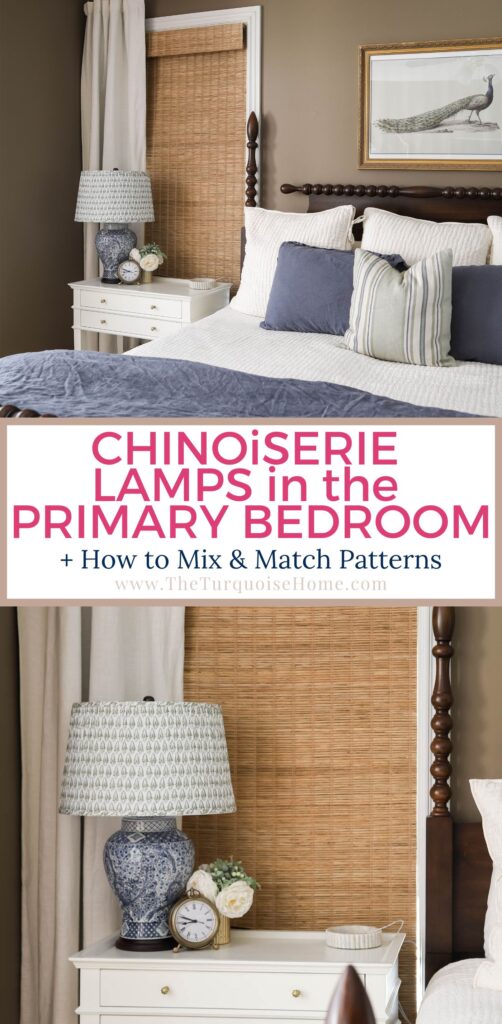
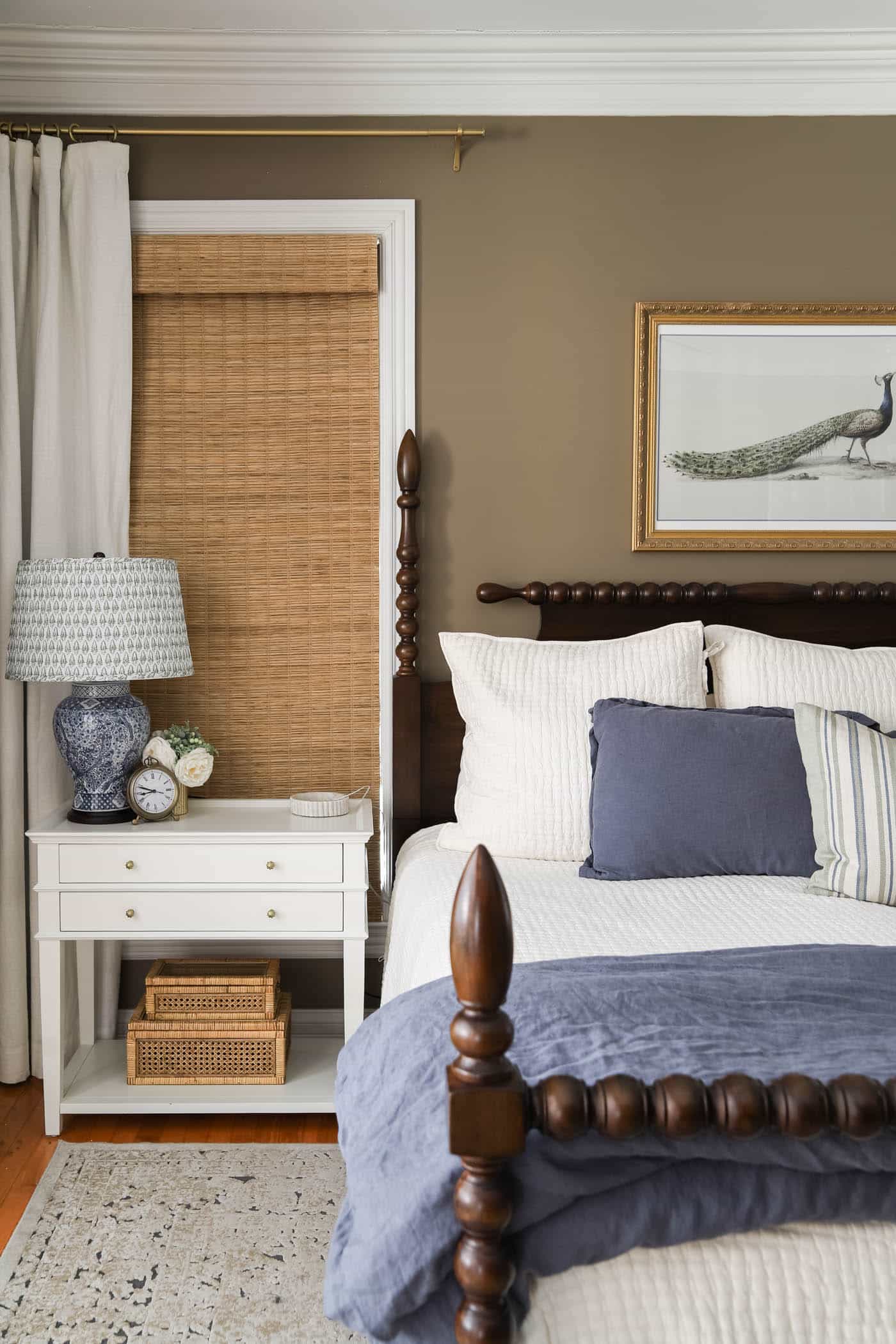
Lighting is one of those finishing touches that’s easy to overlook, but it has such a huge impact on how a room feels. When I swapped in these primary bedroom chinoiserie lamps on our nightstands, the whole space instantly felt more layered, more intentional, and honestly more us.
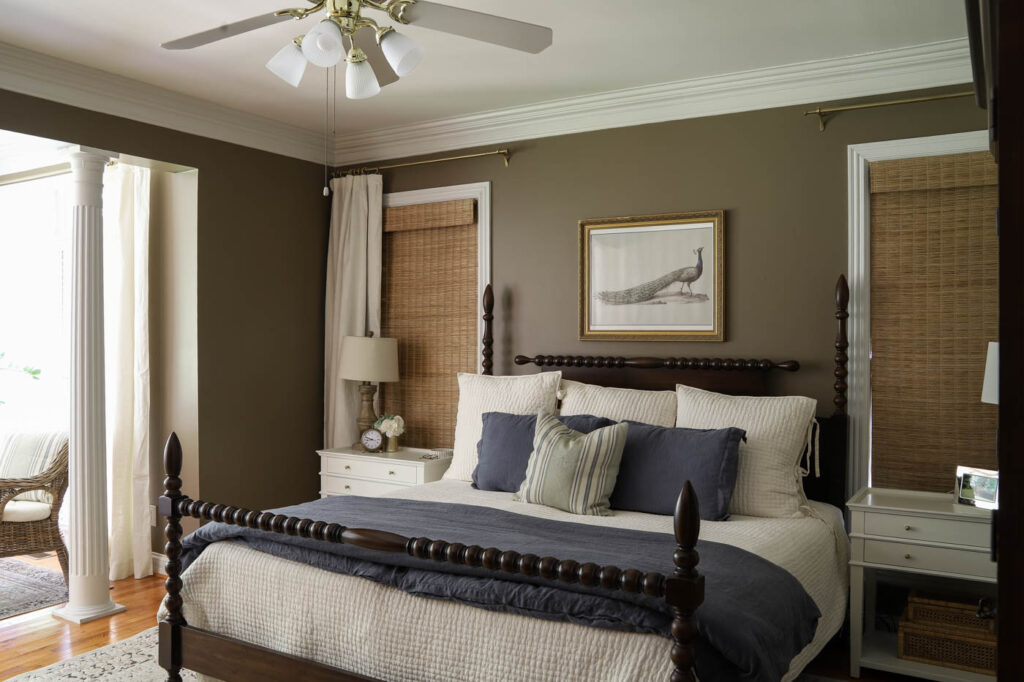
Before this swap, I had not bought new primary bedroom lamps since we lived in our old house, when I got some farmhouse-style lamps probably from Hobby Lobby or HomeGoods. They perfectly matched our farmhouse headboard and bedroom circa 2014, but my style has evolved since then and I’ve been waiting for just the right moment for the right design plan and lamps to come along.
When I was planning out my bedroom makeover (take 2), I knew I wanted a lamp with some color and pattern. I’d been mixing in more and more chinoiserie jars and pots in my home because I love the traditional style and the nod to Asian culture. With the main bedroom colors being brown and blue, I fell in love with the idea of doing a chinoiserie lamp with a dark wood base. These have always caught my eye, but boy can they be pricy. I’m happy to share I found a budget-friendlier version.
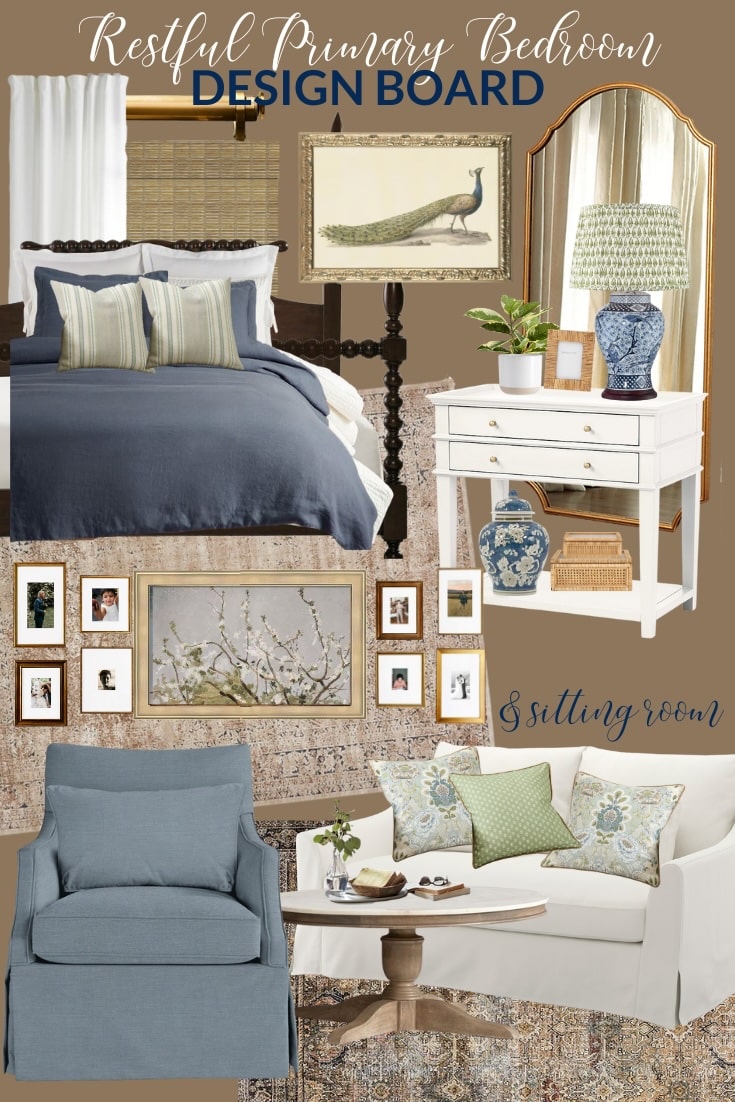
As you can see in the design board above, I wanted to bring in some more pattern play with the ginger jar lamps and the green block printed lamp shades. Even though the design board looks like it includes a lot of patterns, they’re spread throughout a large room, so you’re never seeing them all at once.

Want to Save This?
Enter your email below and I’ll send it directly to your inbox!
This post contains affiliate links for your convenience. See my full disclosure policy.
The Story of the Lamps
The story of the chinoiserie lamps is a whole long thing, but the short story is that I had these on my design board for more than a year before I decided to buy them. And when I finally went to purchase them, they were sold out everywhere. Womp. Womp.
Not knowing if they would ever be restocked, I settled for 2 open box lamps that had previously been returned. I took a chance on them, and while the wood base isn’t perfectly centered on the lamp, I’m fine with it! I got a good discount on them, and they are in a corner of my bedroom. No one will ever notice. I don’t even notice!
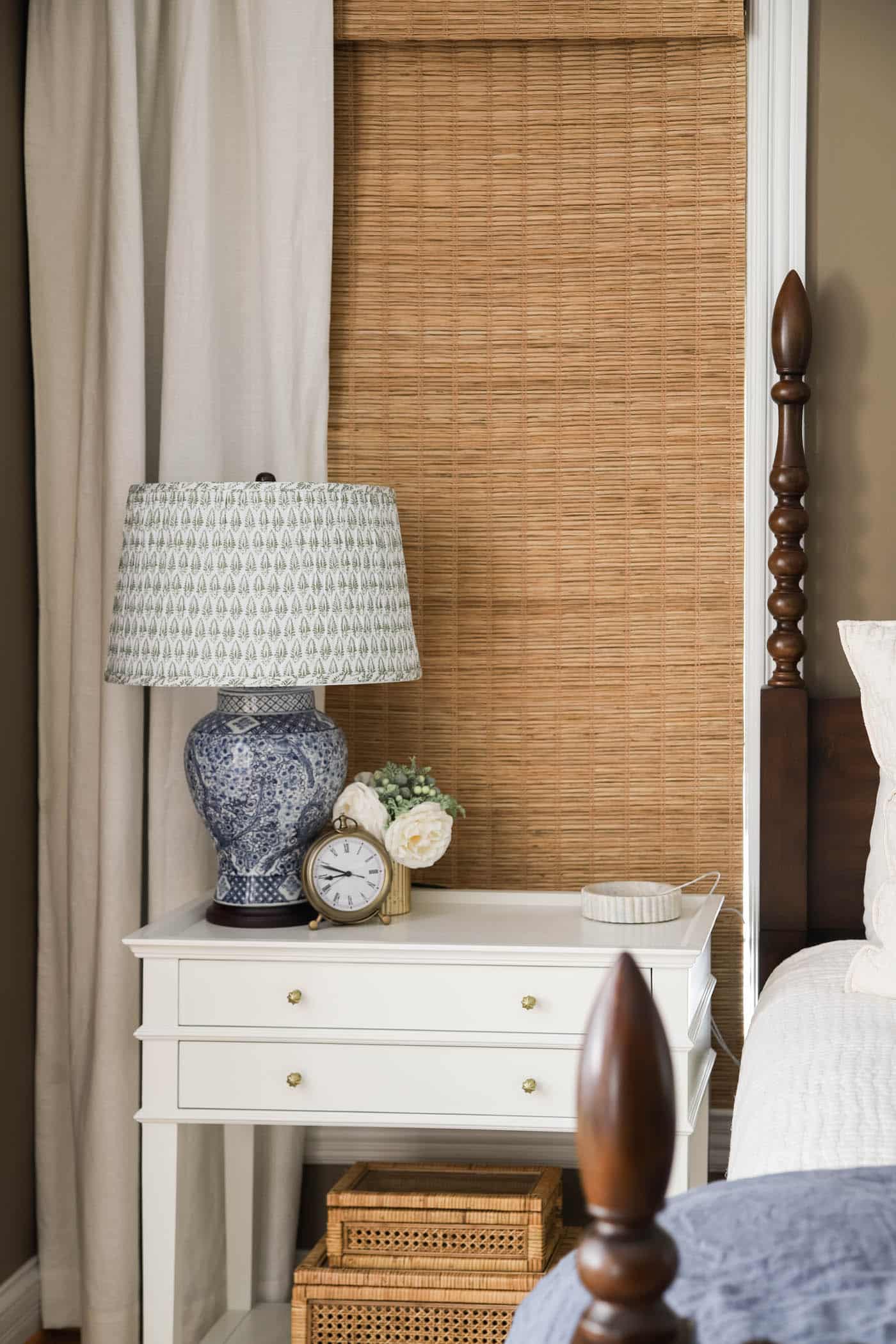
Then the lampshades arrived this week! But if you follow me on Instagram, then you saw that they sent the wrong ones originally (solid green), which I kind of liked. But the correct lamp shades arrived a day later and I loved them so much more! They are the perfect fit for my space.
Now, in the process of talking through all of the options with the lamp shades, I had quite a few comments that told me NEITHER option was a good one. Well, I think the idea of putting two patterns together frightens some people and they like to stick with a solid or white option. But, I LOVE how the green block print gives a nod to the green peacock feathers and it’s not overly bold, but a subtle green that ties everything together! Don’t be scared to play with multiple patterns.
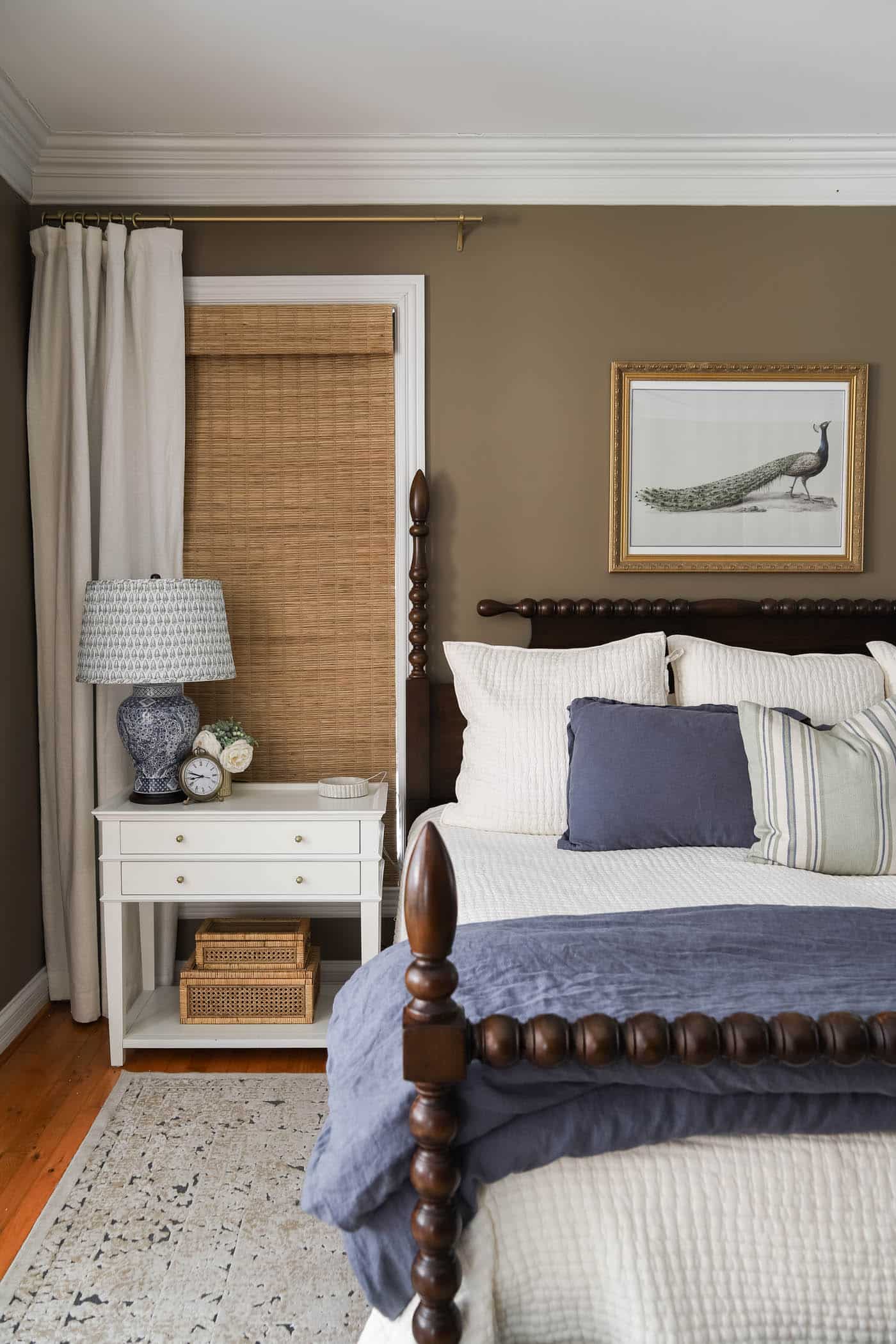
I honestly love how the block print on the lamp shade gives a nod to Mr. Peacock above the bed.
A Simple Pattern Mixing Cheat Sheet
If you ever feel stuck mixing patterns, come back to this little formula. It works in bedrooms, living rooms, and honestly just about anywhere.
- 1 Busy / Statement Pattern
- This is your star of the show — something with movement and detail.
- Examples: chinoiserie, florals, toile, botanical prints
- 1 Small-Scale or Subtle Pattern
- This supports the bold piece without competing with it.
- Examples: tiny geometrics, delicate prints, soft repeating motifs
- Grounding Element (Solid or Texture)
- This gives your eye a place to rest and keeps the room feeling calm.
- Examples: solid bedding, woven shades, wood tones, linen or cotton textures
- 1 Other Simple Geometric Pattern
- This just reinforces the color way and gives another visual interest without competing with either of the other patterns.
- Examples: stripes, plaids and gingham
👉 Bonus tip: Keep at least one color consistent across all three patterns. That shared color is what makes everything feel intentional instead of busy.
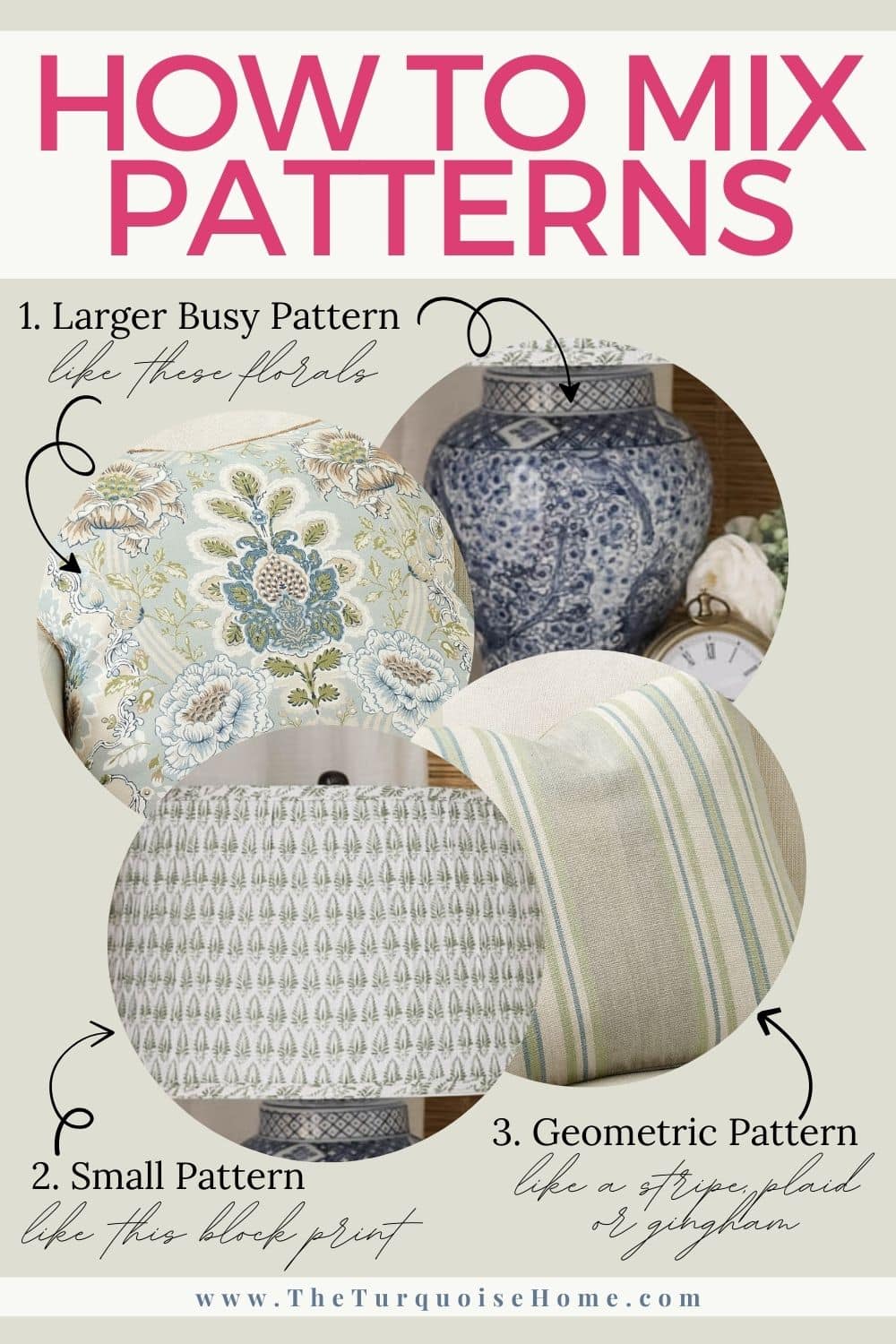
In this bedroom, the chinoiserie lamp brings in the bold pattern, the lampshade adds a softer repeating design, and the woven shade plus neutral bedding ground the whole space. Nothing is fighting for attention and it all works together quietly.
Choosing the Right Nightstand Lamps for a Primary Bedroom
When selecting nightstand lamp ideas for a primary bedroom, here’s what I always keep in mind:
- Height matters — you want the shade to sit just above eye level when you’re in bed, which is typically 19–21 inches from the top of the mattress, or 24–27 inches tall for a standard nightstand.
- Balance the space — don’t buy lamps too small for your space! When purchasing lamps, they need to fill 1/3 to 1/2 of the nightstand. When flanking a king bed, bigger is usually better.
- Texture counts — wood bases, pleated shades, and ceramic finishes all layer beautifully.
These lamps check every box and bring that collected-over-time feeling I love.
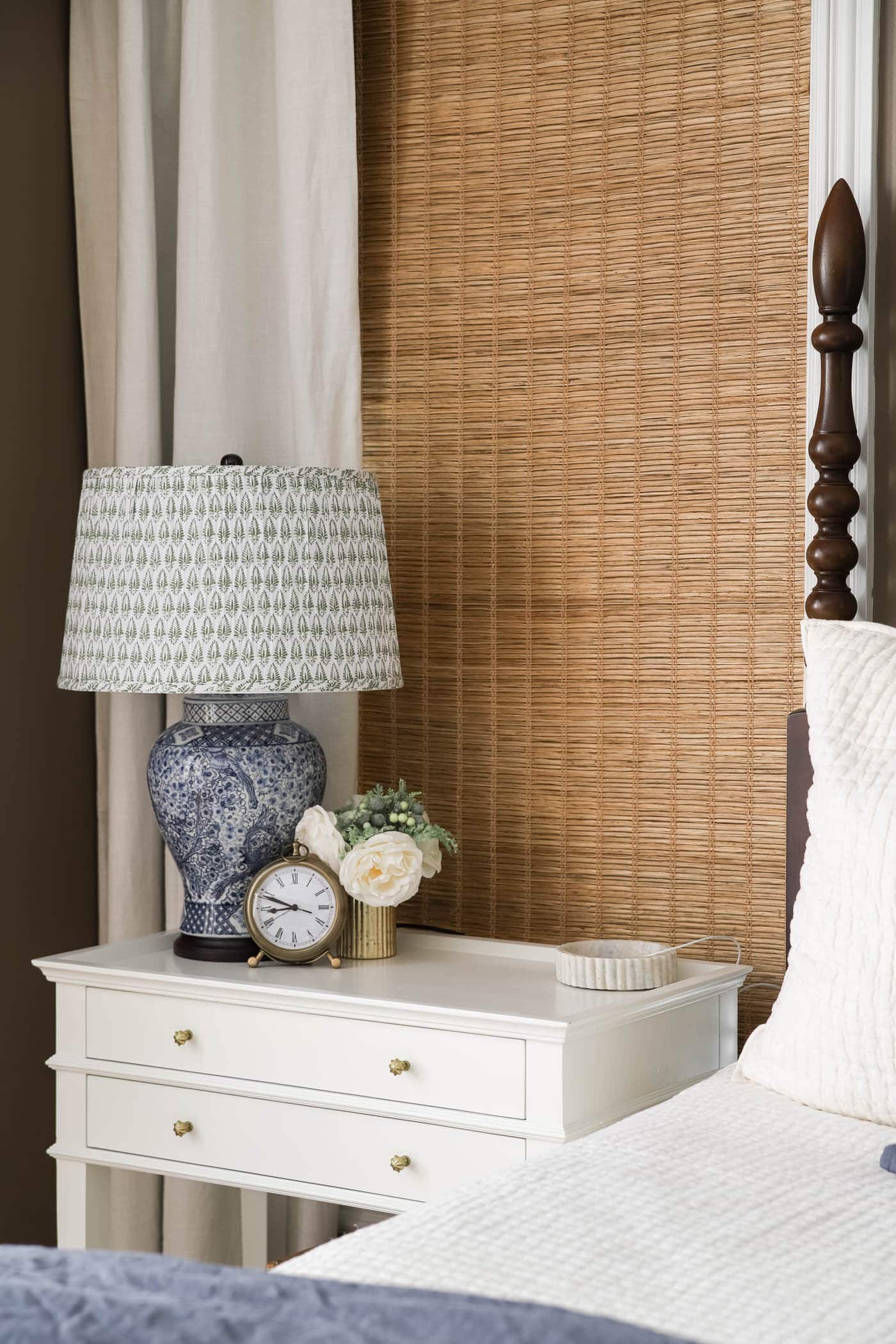
Why Chinoiserie Lamps Work So Beautifully in a Primary Bedroom
Chinoiserie has that rare ability to feel both classic and fresh at the same time. The soft curves of a chinoiserie jar lamp, paired with its traditional patterning, bring a sense of history and charm that works beautifully in a primary bedroom.
These lamps add just enough visual interest without feeling busy, which is exactly what I want in a space meant for rest.
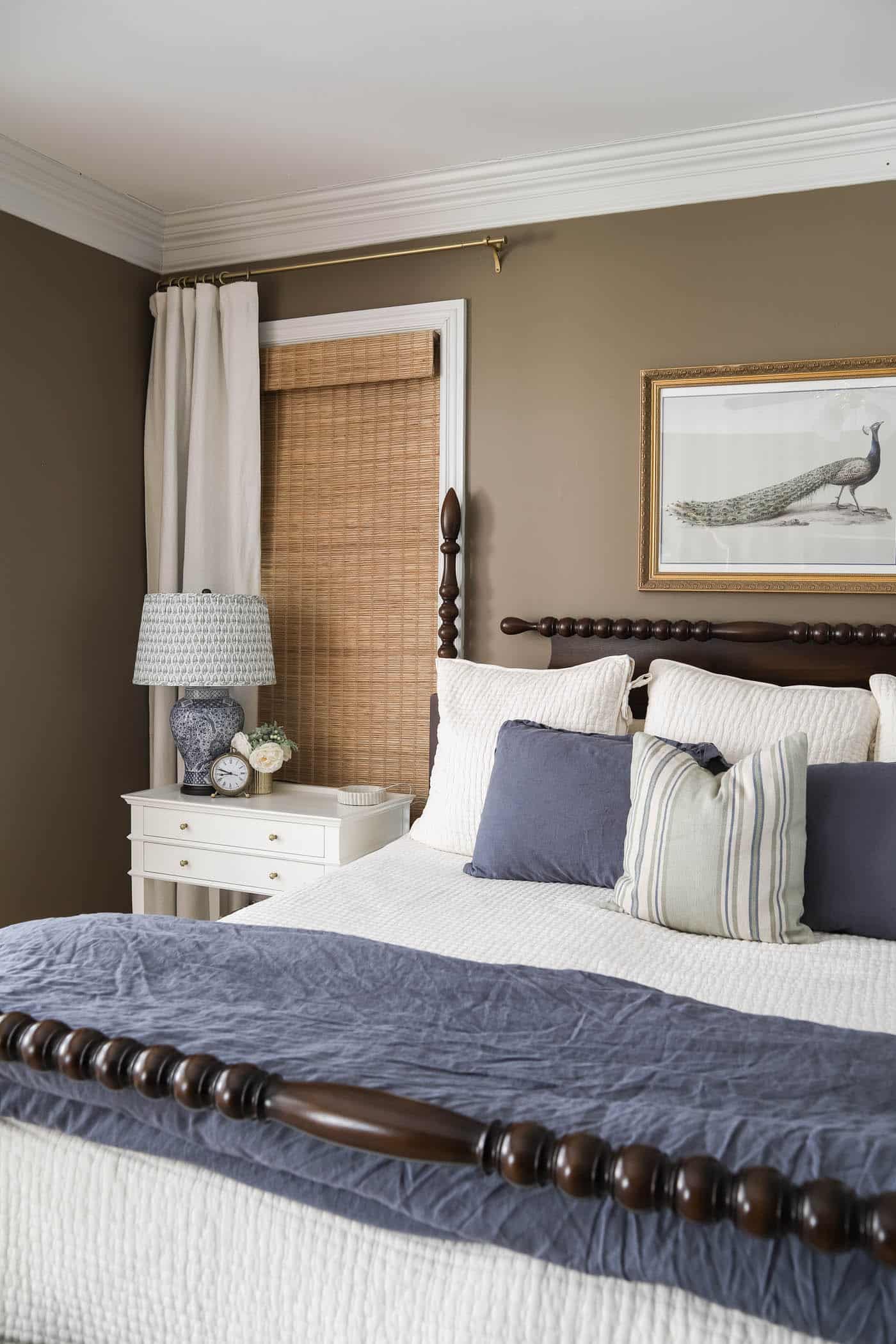
The Charm of a Block Print Pleated Lampshade
The block print pleated lampshade brings in pattern, texture, and just the right amount of visual interest without overwhelming the space. It softens the look of the lamp and keeps it from feeling too formal or fussy.
What I love about it:
- The pleats add softness and dimension, which is especially nice in a bedroom
- The block print pattern introduces a subtle layer of pattern that feels timeless, not trendy
- The blue and green tones tie in beautifully with the bedding and the chinoiserie lamp base
- It creates a warm, cozy glow at night, perfect for winding down at the end of the day
If you love mostly neutral bedrooms but want them to feel layered and collected, a patterned lampshade like this is such an easy place to experiment. It adds depth and personality without committing to something permanent, which is exactly the kind of slow, thoughtful decorating I always come back to.
Shop This Look: Classic Bedroom Lighting & Decor
- Chinoiserie jar lamps
- Block print pleated lampshades
- Nightstands
- Four-poster Bed Frame
- Pick-Stitch Quilt in Classic Ivory
- Linen Duvet Cover in Steel Blue
- Striped Throw Pillow
- Linen Curtains in Ivory
- Peacock Artwork (my DIY frame)
- Rattan Display Boxes
Final Thoughts
Creating a bedroom you love doesn’t have to happen all at once. Sometimes it really is just one thoughtful, well-chosen piece that brings peace and polish to the whole space. These chinoiserie lamps were a reminder to me that waiting, planning, and trusting your instincts pays off, and that small changes can make a room feel more restful and complete. If you’re in a season of slow decorating, take heart. One layer at a time is more than enough, and a home built with intention always tells the best story.
Happy Decorating! xo, Laura
I also like that you placed the lamp off to one side of the nightstand. Most of us tend to center the lamp in the middle of it but this placement is more visually interesting.
The lamps are gorgeous! They make a beautiful addition to the room. ❤️