
DIY Cornice Board: How to Make a Fabric-Covered Window Cornice
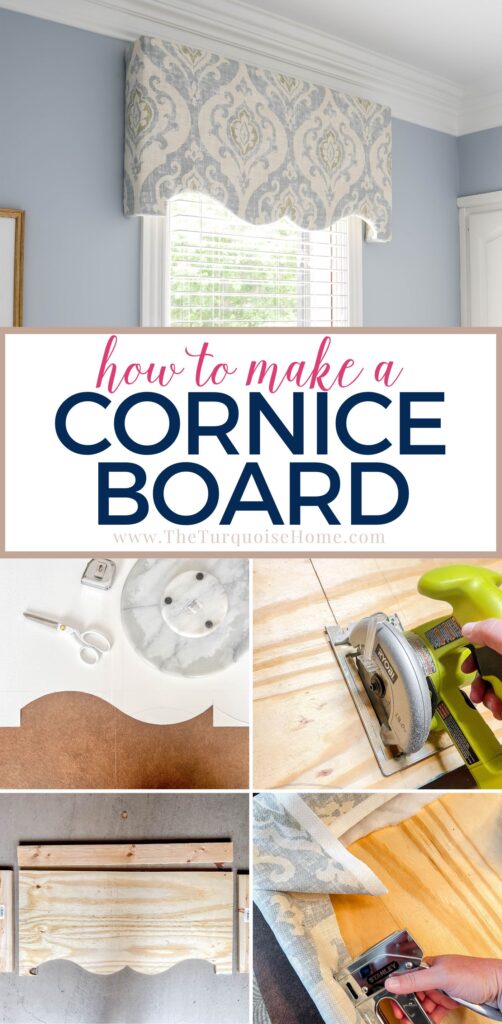
Are you tired of looking at bare, boring windows? Cornice boards can add a touch of elegance and style to your decor. These boards are the perfect finishing touch for any room, and they can be surprisingly easy to make. In fact, with a little bit of time and effort, you can create your own DIY cornice boards right at home.
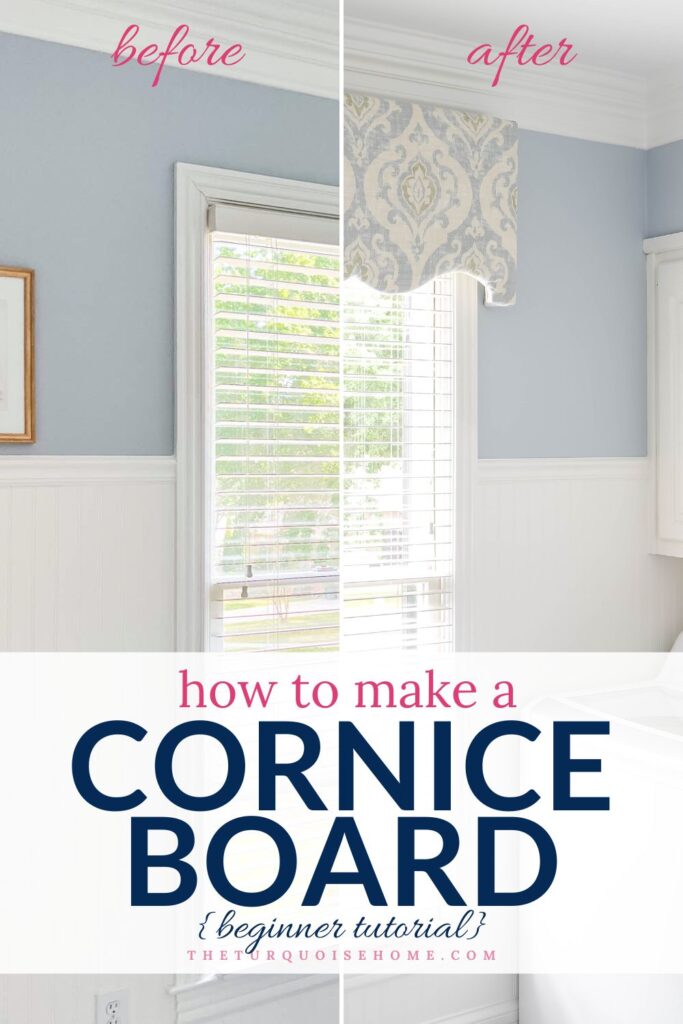
I’ve been working on making over my 1990’s basic laundry room for more than a year now and I’ve finally finished the next piece of the makeover! I’m almost to the finish line, and it’s come together so well!
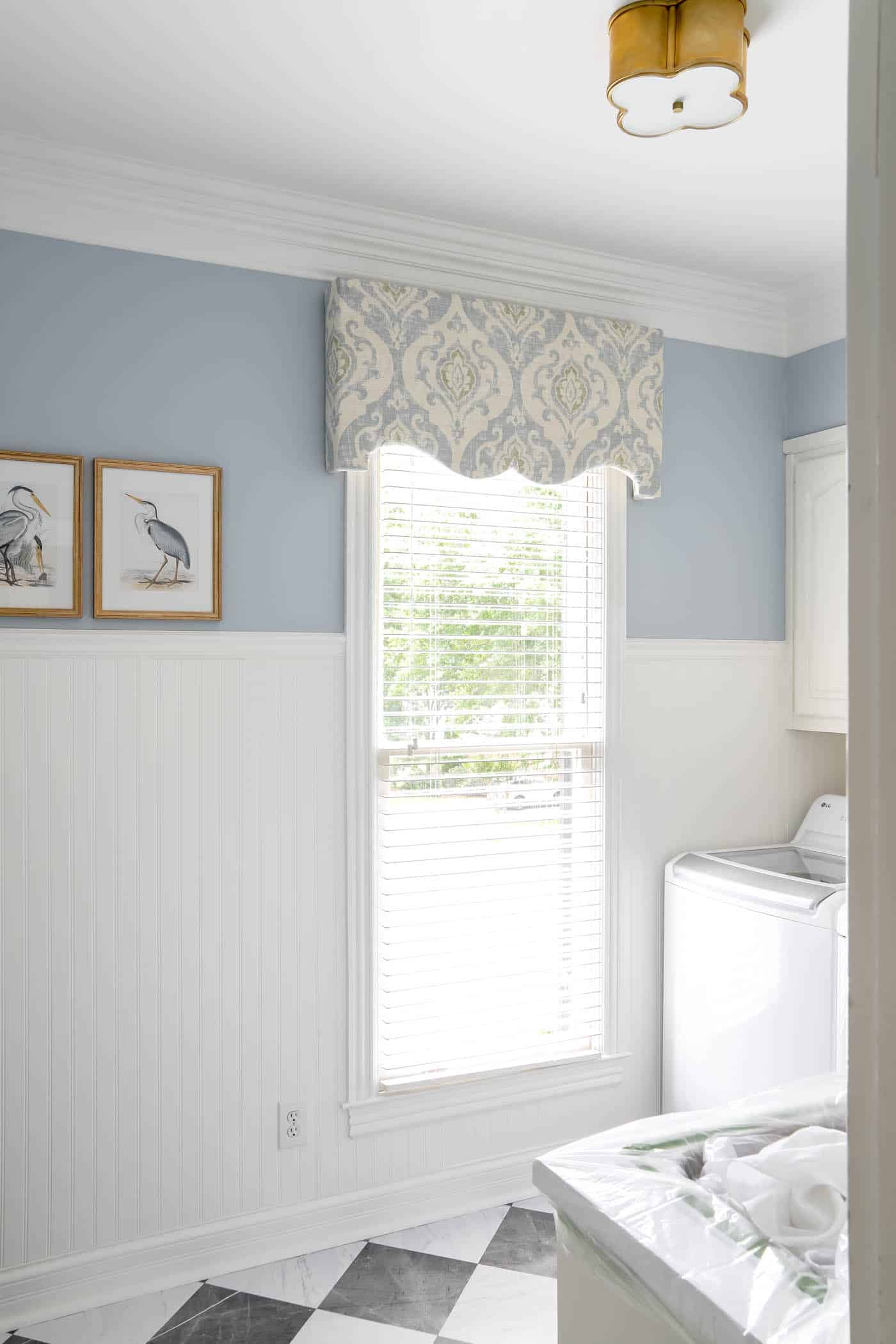
The room has some color in the walls and the art, but it needed some pattern and I’m happy that this fabric-covered window treatment was the perfect addition! Drapes would have gotten in the way of work in the laundry room, so a cornice board was the perfect option.
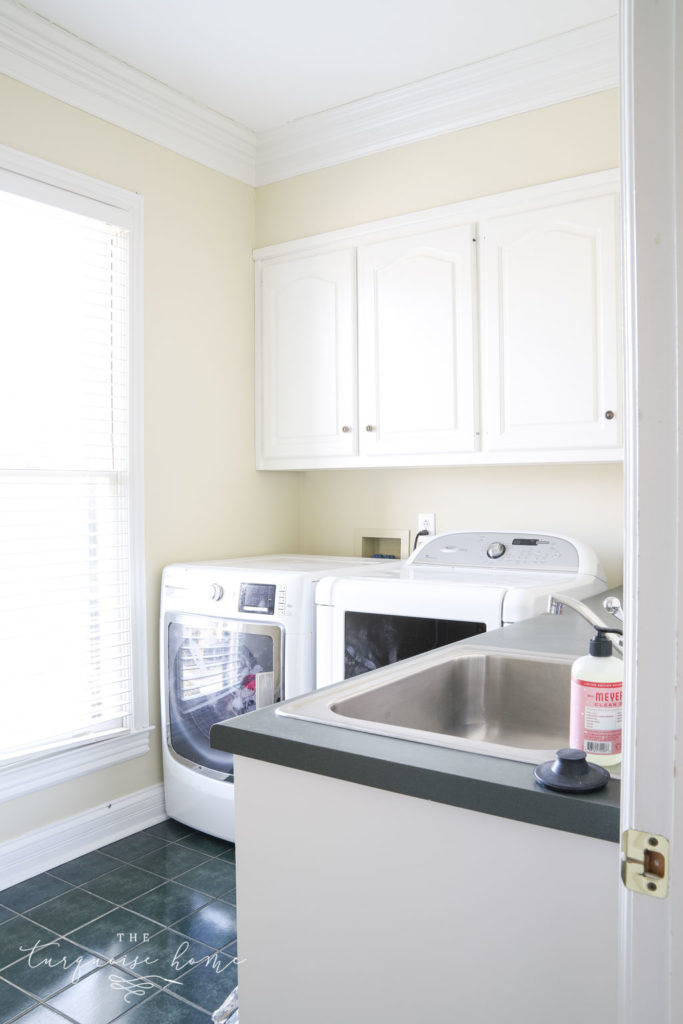
This is how the laundry room looked when we moved in.
And the below picture is how it looked right before I started this project. You’ll have to scroll to the end to see the final picture!
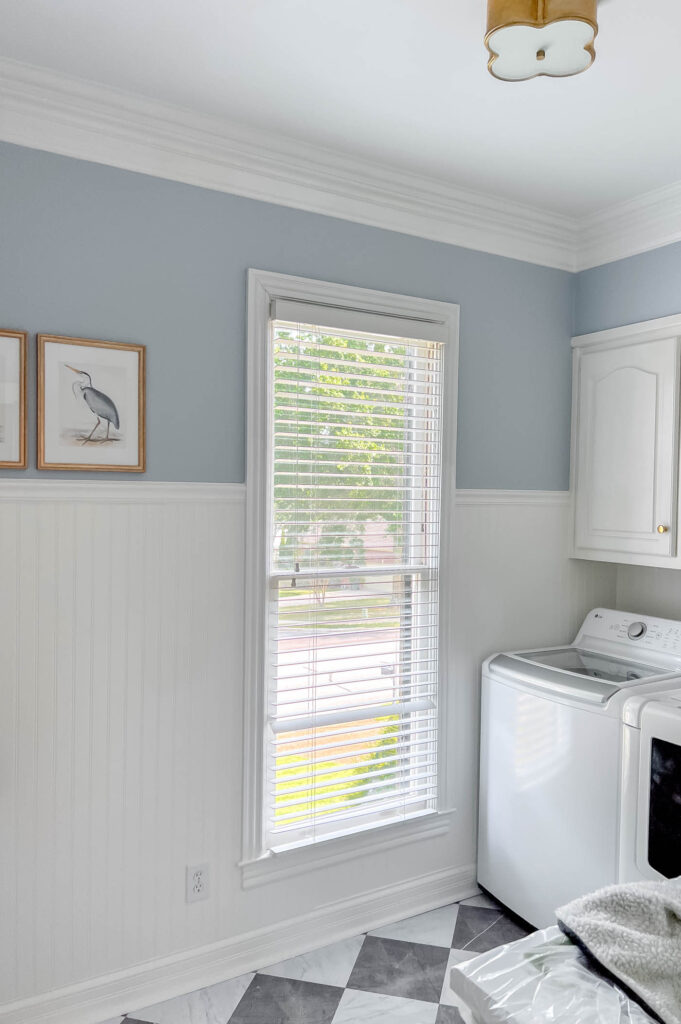
I’ve already:
- Covered the flooring with peel-and-stick vinyl tiles
- Installed beadboard and a chair rail
- Painted the walls Simply White and Heather Blue
- Moved the drying rack to a different wall
- Moved the mops and brooms behind the door
- Added art
- Changed the light fixture to this beautiful flush mount light
- And now finished the cornice board!!
Since then, I’ve also painted the old countertops to look like marble, which finally finished off this laundry room makeover!
DIY Cornice Board At a Glance

Want to Save This?
Enter your email below and I’ll send it directly to your inbox!
What are cornice boards?
Cornice boards are decorative, immobile window treatments that are placed at the top of a window. They can be made from wood, fabric, or a combination of both. They can be shaped differently depending on the room you are decorating and your style.
Cornice boards are typically used to hide window treatment hardware and add an elegant finish to a room. Any novice DIYer can make one for the cost of supplies and just a few short hours. It’s a great beginner DIY project!
DIY Cornice Board Ideas and Styles
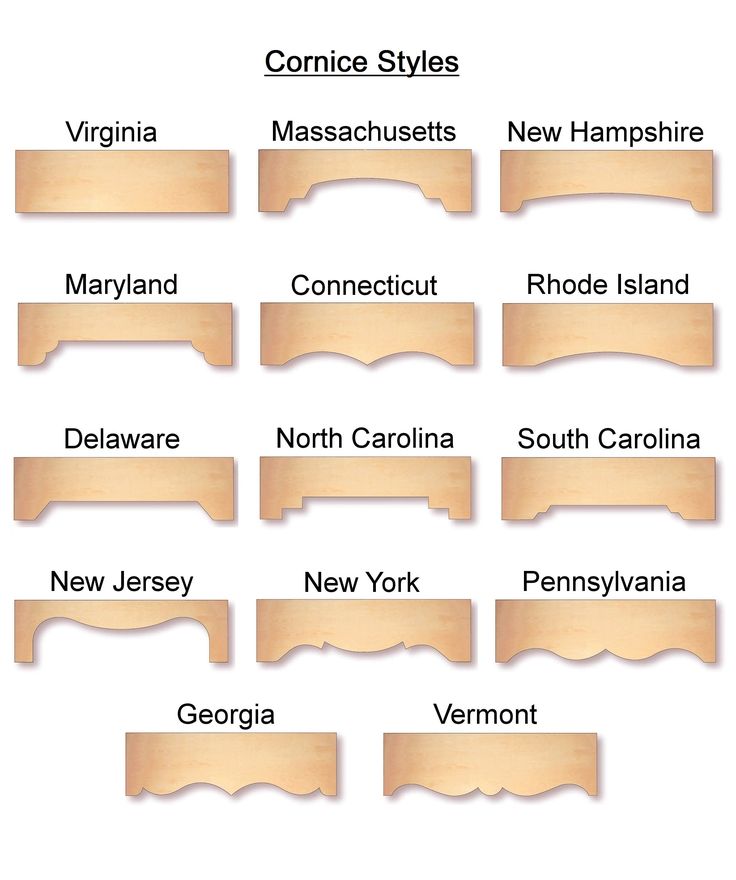
One of the best things about making your own cornice board is that you can completely customize the shape to fit your decorating style. A simple rectangular cornice box is the easiest option for beginners, but you can also add curves, scallops or decorative details for a more traditional look.
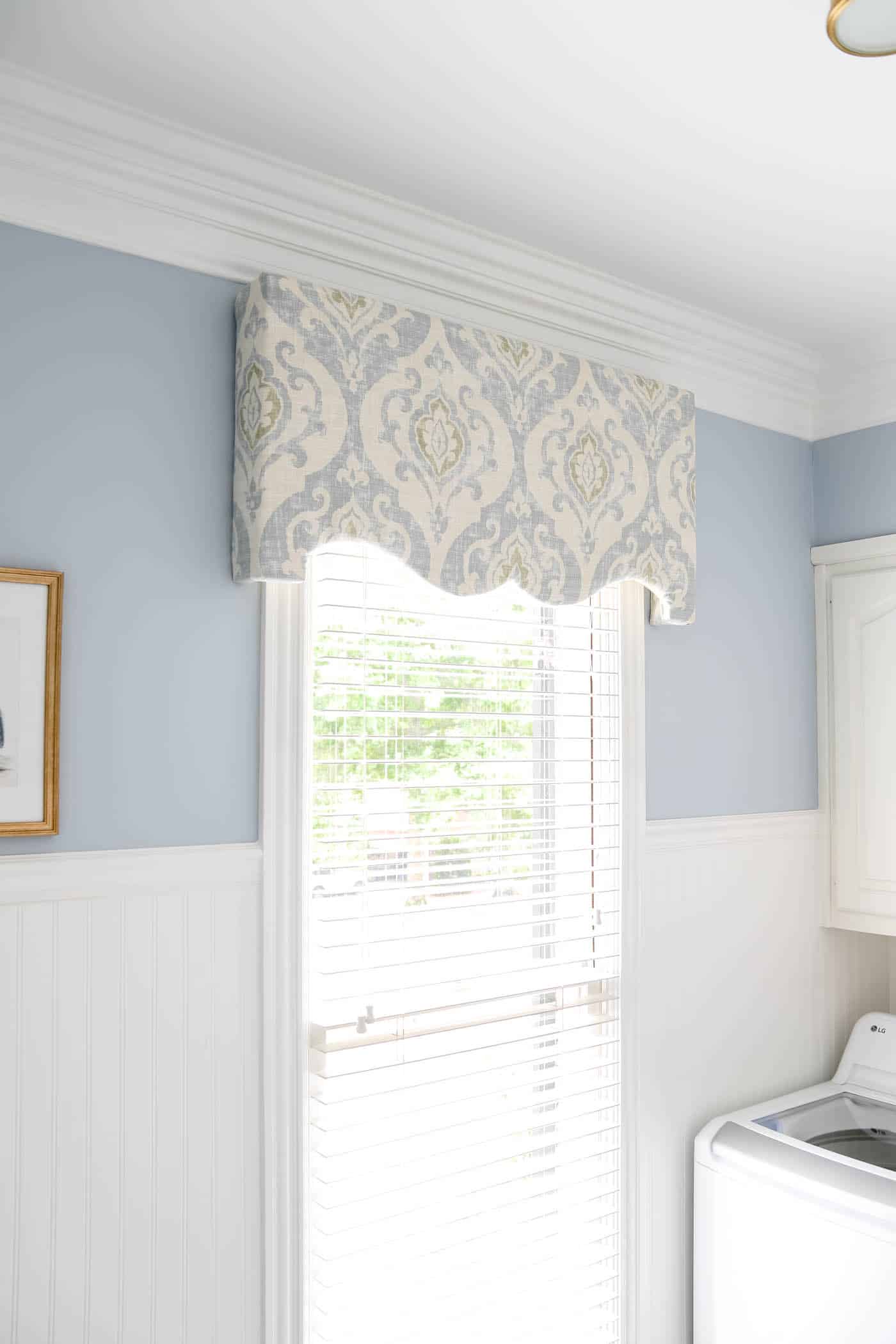
For my laundry room, I chose a Pennsylvania-style cornice with a curved center. The shape adds a little more personality to the window and looks especially pretty covered in patterned fabric.
If you’re unsure which style to choose, make a full-size paper or cardboard template first and hold it above your window. It’s much easier—and cheaper!—to change the shape of a cardboard template than a piece of plywood.
This post contains affiliate links for your convenience. See my full disclosure policy.
How to Measure for a Cornice Board
Before you start cutting wood, you’ll want to figure out the best size for your cornice board. Don’t stress! There’s a little flexibility here depending on your window and the look you want.
Start with the width of your window, including the trim, and add about 4–6 inches. This allows the cornice to extend approximately 2–3 inches beyond the window casing on each side for a more finished look.
Next, decide how tall you want the cornice board to be. It should be tall enough to hide any blinds, shades or curtain hardware without covering more of the window than necessary.
For my laundry room window, I made the cornice 19 inches tall so it would cover the window hardware and fit nicely underneath the crown molding.
Finally, think about the depth of your cornice, or how far it will project from the wall. You’ll need enough clearance for your window trim, blinds or shades, plus enough room to install the finished cornice.
These measurements will determine the size board you need to buy. I bought a large piece of plywood that was 23/32 inches thick. This gives plenty of depth for screwing in the brackets to the wood.
One thing I’d do differently: My cornice projects 3.5 inches from the wall, and while that was deep enough to clear my blinds and window casing, it was a tight squeeze when I tried to get my drill underneath it during installation. If I made it again, I’d give myself a little more room or use a different hanging method.
Holding a cardboard or poster board template above the window before cutting your wood is an easy way to make sure you like the size and proportions first.
Before You Start
Choose Your Fabric
You’ll want to choose a medium-weight fabric, not too heavy or light. These are linen, canvas, polyester or cotton/polyester blend.
A medium-weight fabric will allow you to fold it over the board without pulling or wrinkling, but won’t be too bulky, either. I chose this beautiful blue and green damask fabric.
Here are some fabric ideas to get your wheels turning…
SHOP FOR FABRIC

Now that you have your measurements and fabric selected, it’s time to gather your supplies and start the project!
Supplies Needed to Create a DIY Cornice Board
Creating your own cornice board requires a few basic tools and materials. Here is a list of what you will need:
- Poster board for a template
- Pencil
- Scissors
- ~ 3/4″ thick Plywood or wood boards to build the cornice
- 1 x 4 x 8 board for sides and top, or cut these pieces from the plywood
- Fabric (enough to cover the cornice), usually 1 yard of fabric will cover it.
- Poly-fil cushion padding (enough to cover the cornice)
- Staple gun and staples
- Drill
- Saws – a circular saw, miter saw and jig saw, or a miter box and hand saw
- Wood glue
- 3-5 “L” brackets and screws
- 2 corner braces and screws
- Additional corner braces, optional
- Embellishments, like corded trim or fringe (optional)
- Additional plain fabric for the backing (optional)
How to Make a DIY Cornice Board with Fabric
Here are the basic steps you need to follow to create your own cornice board.
Step 1: Make a Cornice Board Template
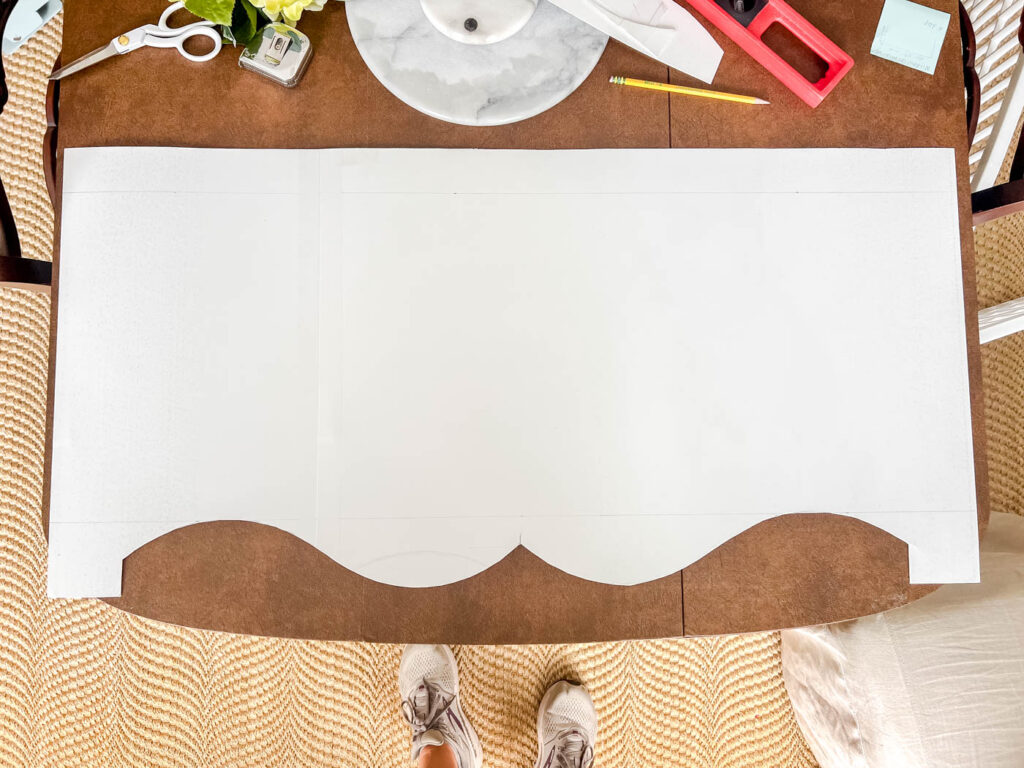
Unless you are doing a simple, straight cornice, you’ll need to make a template. Use the shapes I’ve shared above to get ideas. I used two pieces of cardboard taped together to make the size I needed. And then I traced a lazy susan I had to create the “Pennsylvania” shape.
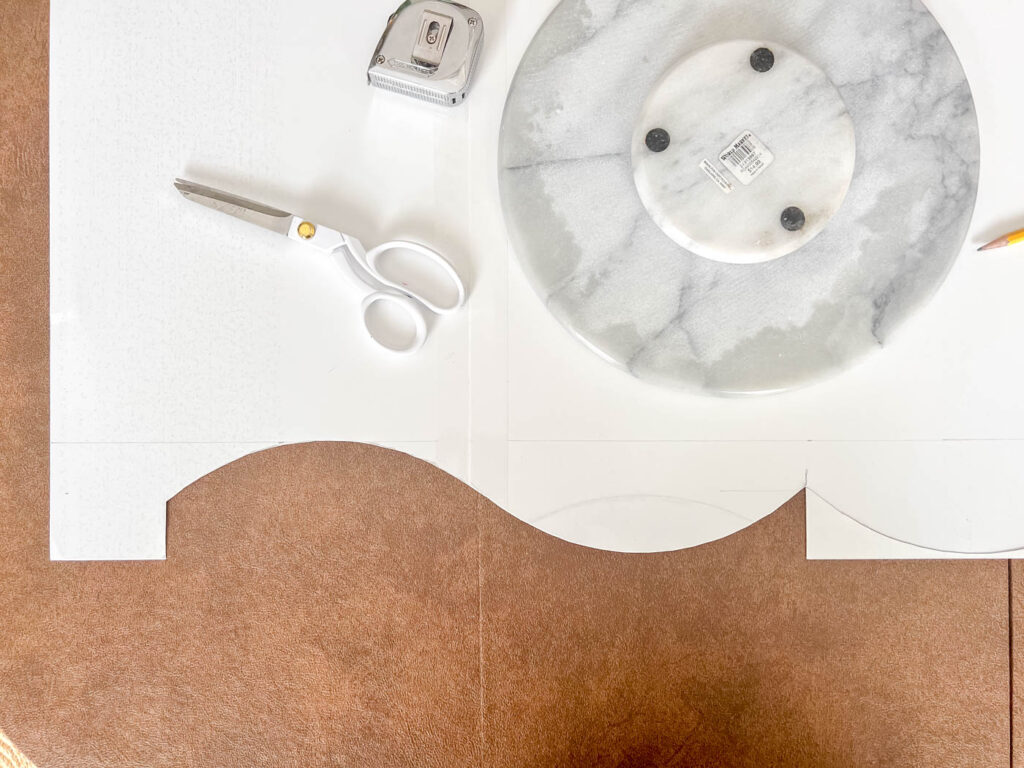
Once you have the template drawn just right, cut it out.
Step 2: Cut the Plywood
Using the template, trace the pattern on the piece of wood. Cut it out with a circular saw and jig saw. I cut the straight edges with my Ryobi circular saw, which is small and easy to handle.
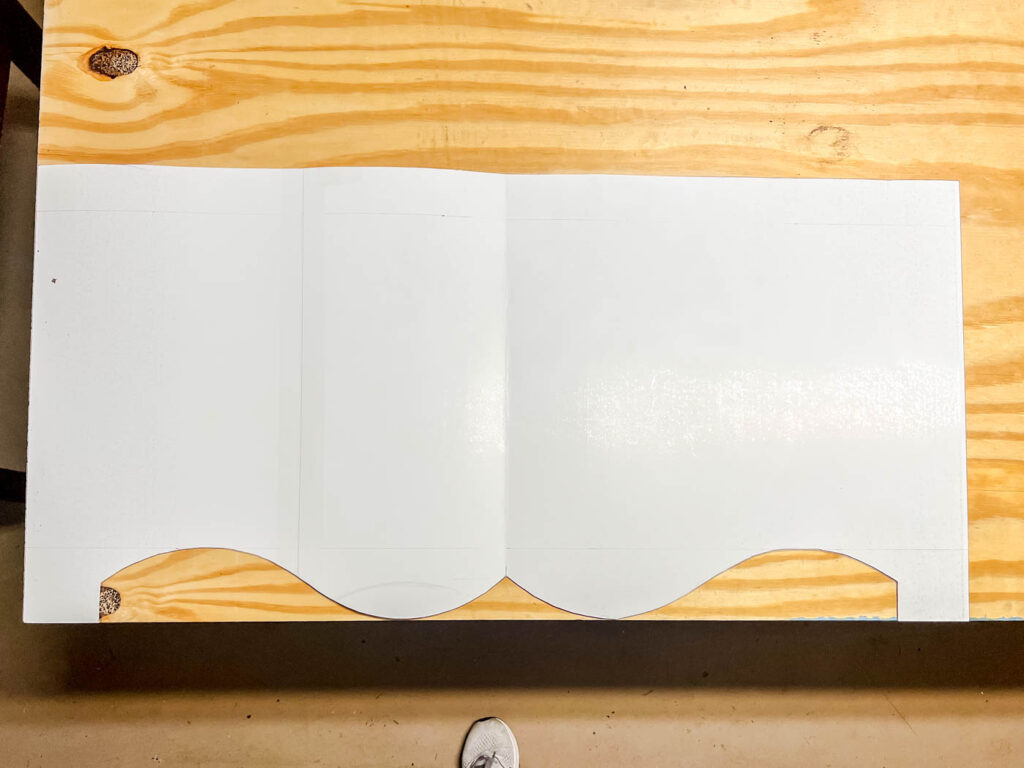

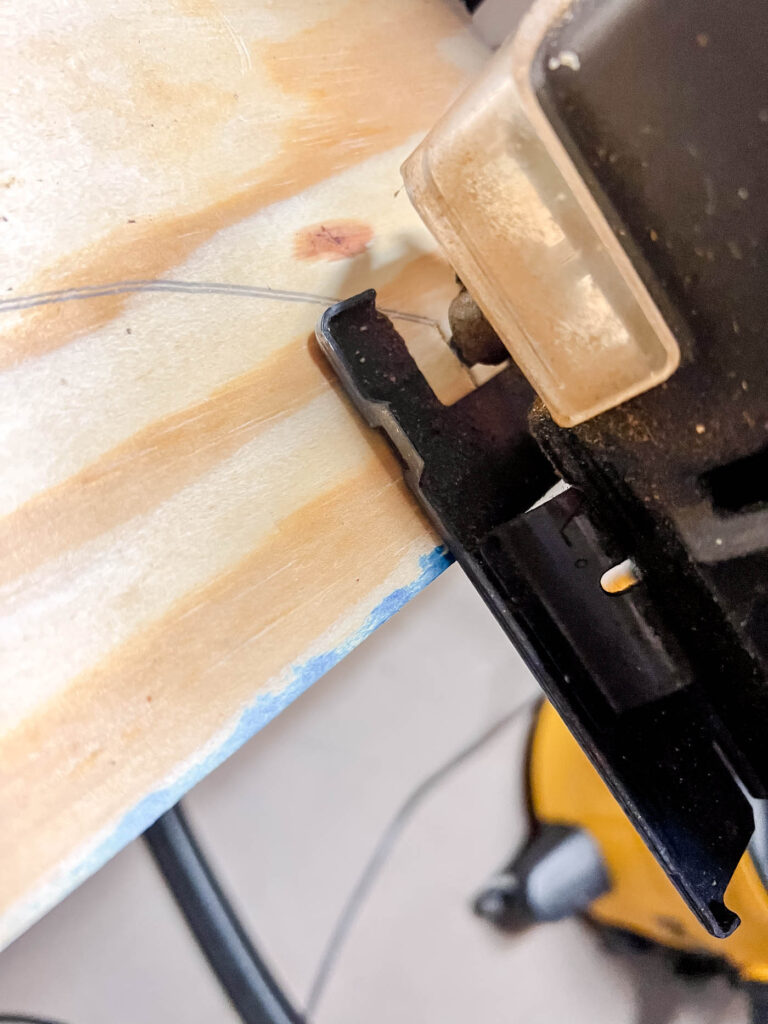
I used my jigsaw to cut the wavy pattern at the bottom. You will have to use a jigsaw for this part! I have an old one that my husband came with, but I’d get the Ryobi one if I didn’t have one already.
Step 3: Cut the Top and Side Pieces
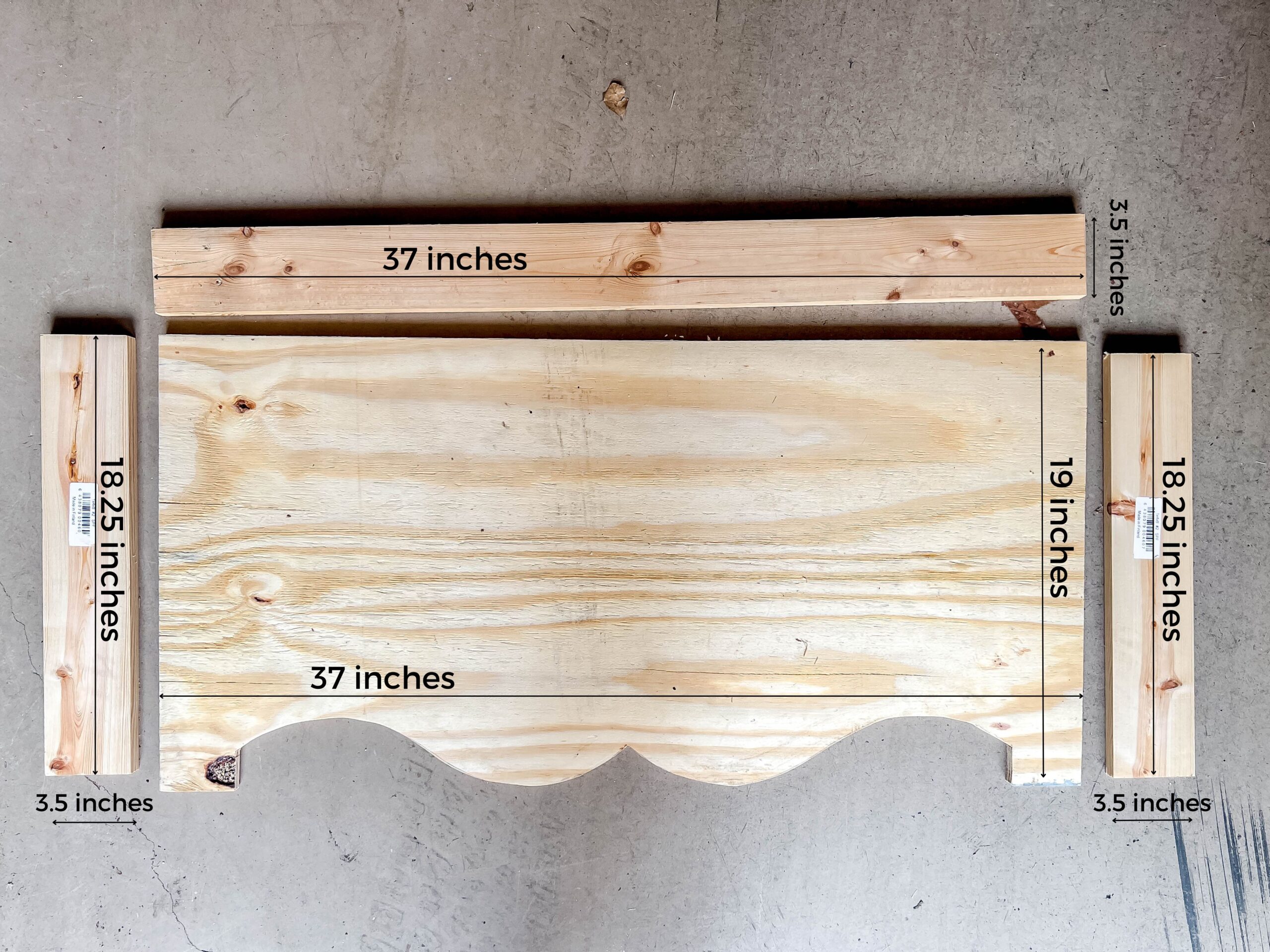
Then cut the side and top pieces to the height and width of the board. See the diagram below.
The width of your top and wide pieces will determine how far from the wall the cornice will stick out. So, you will need to decide how far you want your cornice board to stick out from the wall before choosing and cutting the boards.
I had some leftover 1 x 4 boards laying around, so I used those. That meant my cornice board would stick out from the wall 3.5 inches, because a 4″ board is actually 3.5″.
While it was deep enough to clear the blinds and window casing, it was almost too narrow for me to fit my hand and drill under the cornice to screw it in place. But, if I had been thinking, I could have just hung d-rings on the back of the board and hung it that way. In the end, it all worked out.
The top piece is the same width as the front of my board. But the side pieces were the same height as my front board, minus the depth of the top piece, which was .75 inches.
At this point, you can sand the edges smooth with sandpaper, but you don’t have to. Any rough edges will be covered with filler and fabric.
Step 4: Assemble the Cornice Box
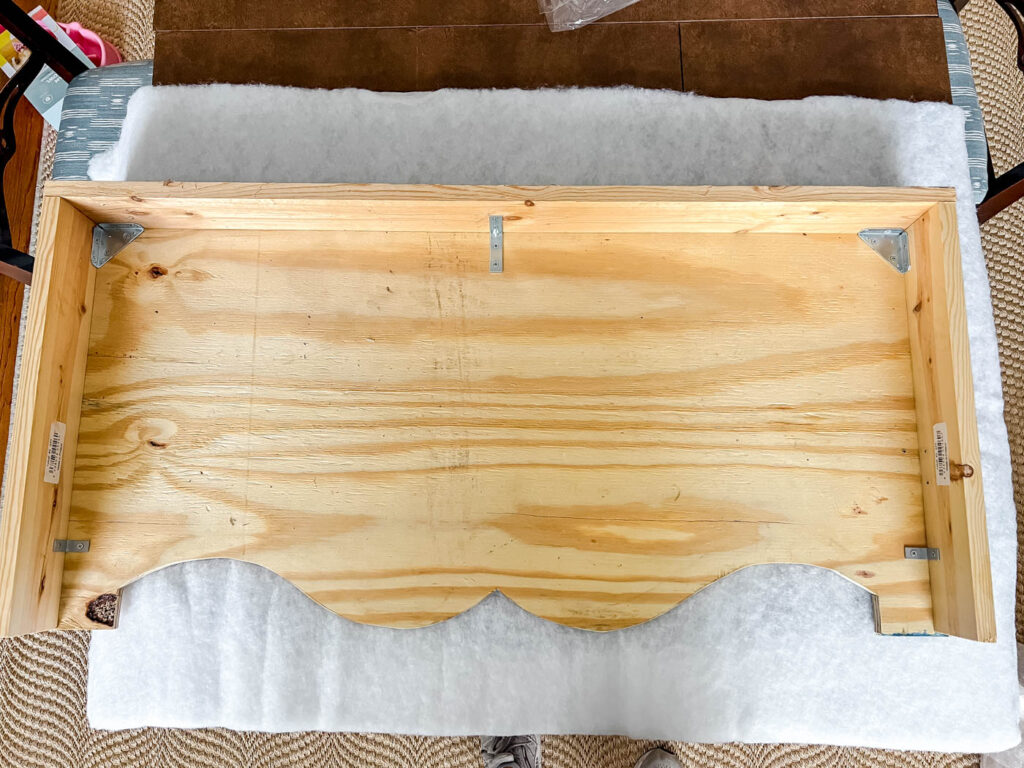
Use a corner brace in each corner to connect all of the pieces. And add some “L” brackets to the sides and top for additional support.
Step 5: Add Batting or Padding
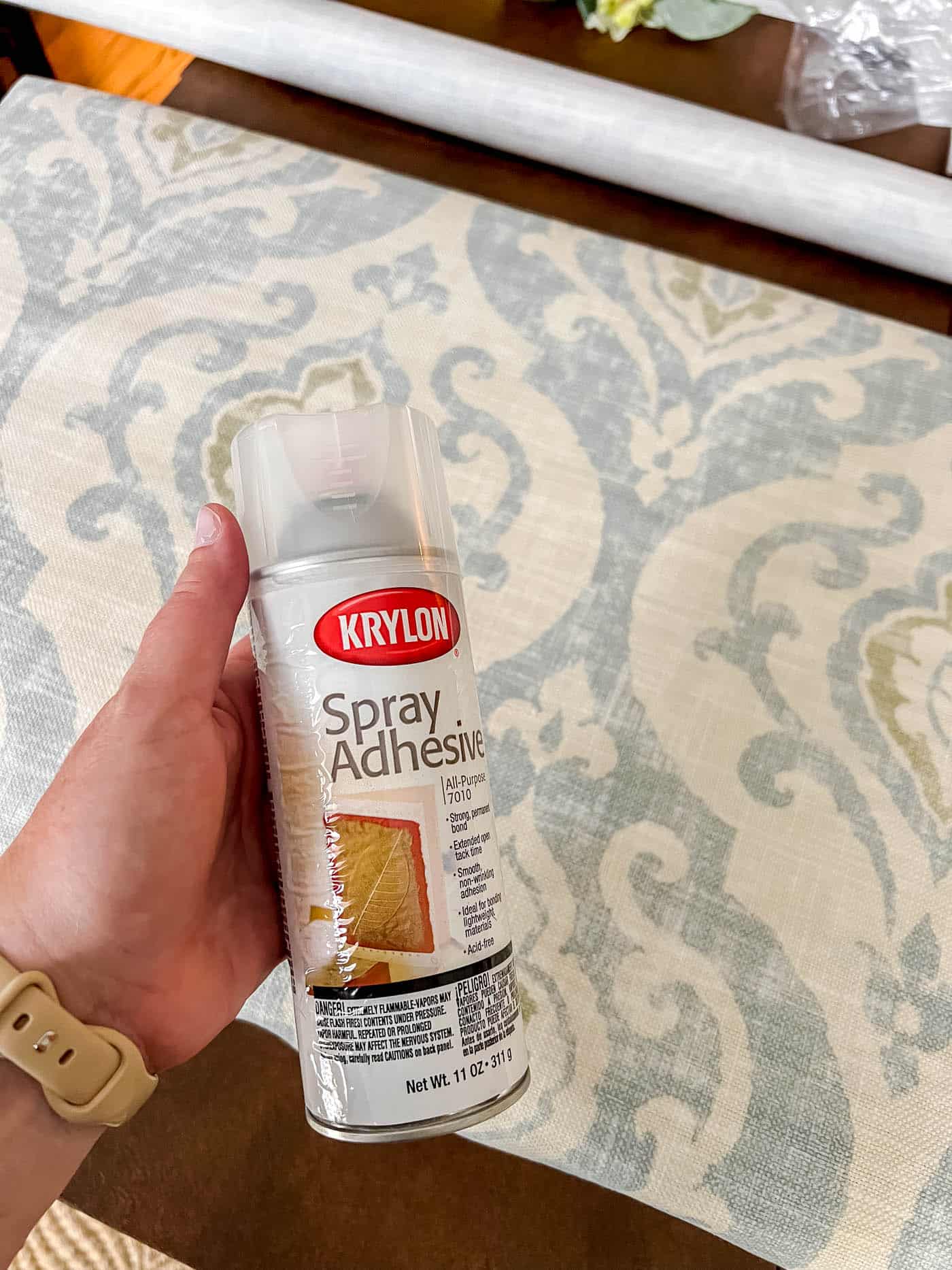
Cut the poly-fill cushion filler to the size of the board, allowing extra for wrapping around the board and stapling to the back. This will keep the edges of the board soft so that the end result looks better.
Make sure to smooth out any wrinkles and pull the filler tight before stapling.
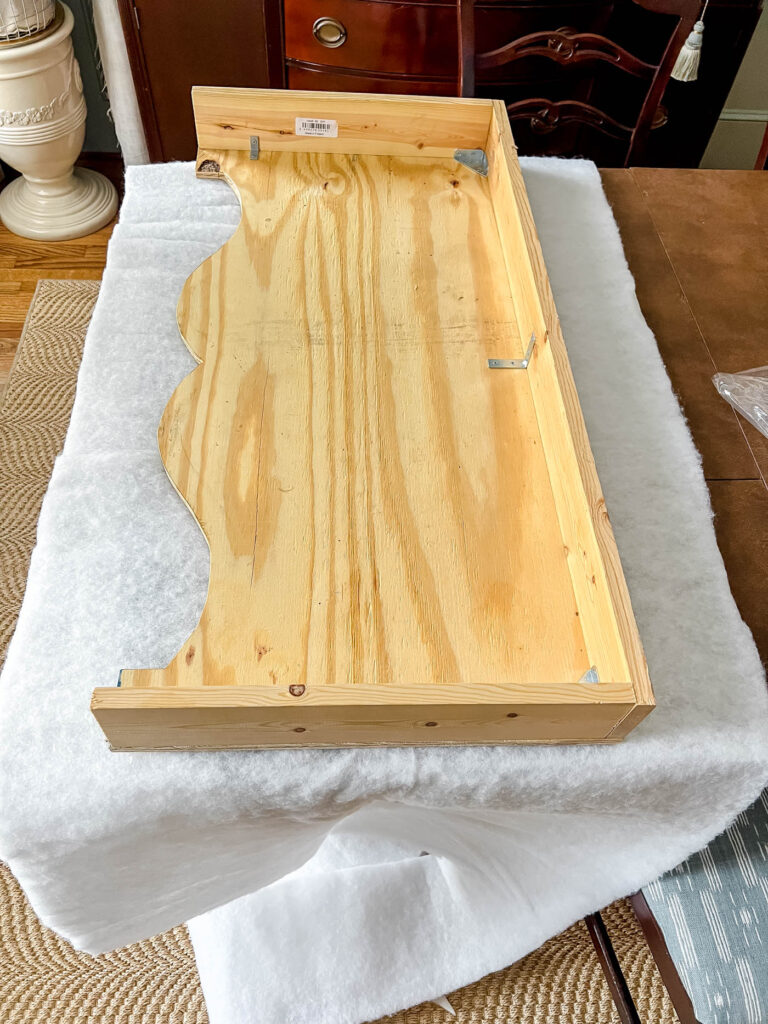
Start at the top and fold the filler over the side and staple each section with your stapler, pulling the filler tight as you go. Fold the corners neatly, like you are wrapping a gift.
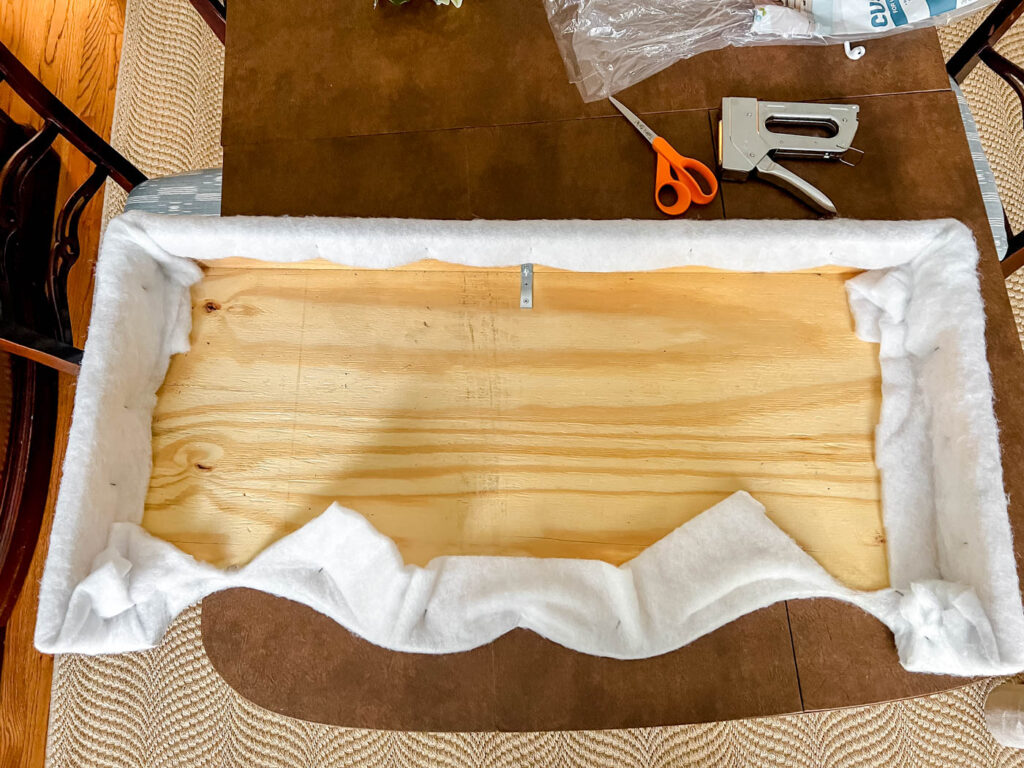
After I took the above photo, I cut away more of the excess filler so that it wouldn’t be too bulky under the fabric.
Step 6: Center the Fabric
Flip the board over to the front and make sure the pattern on the fabric is lined up exactly how you want it. It was helpful that my design made the middle of the board really easy to find.
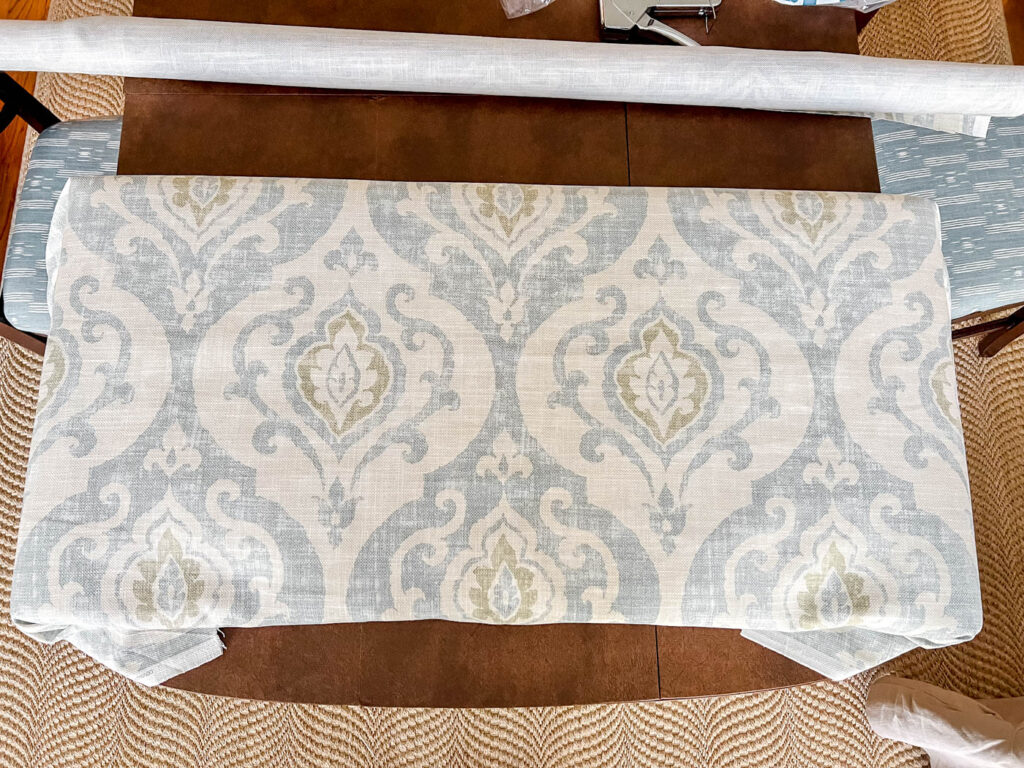
Carefully flip it back over, keeping the fabric in place.
Step 7: Cover the Cornice Board with Fabric
Starting at the middle top, again, start stapling the fabric to the back inside of the board. Pull it tight as you go. Make relief cuts, if needed when the board dips inward.
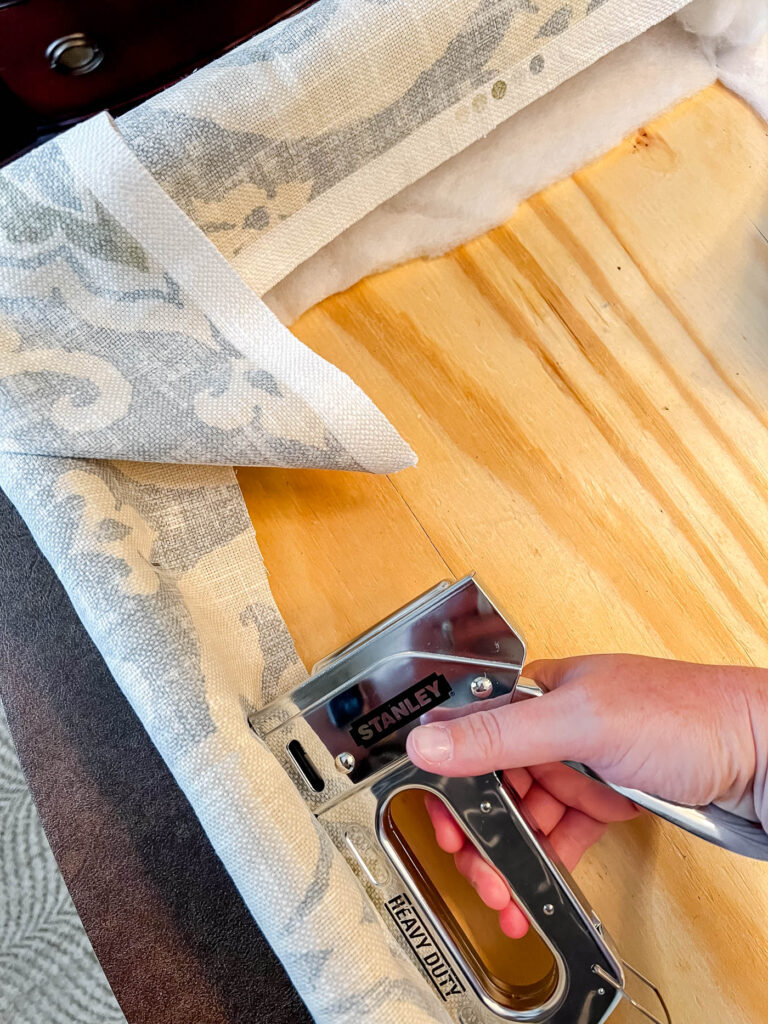
Wrap the corners neatly, like you would wrap a gift.
Step 8: Finish the Back of the Cornice
If your window faces the street and you’re concerned about the back of the cornice board looking rough on the back side, you can make a liner. I used the poster board template I had already made, cut down the outside edge, wrapped it in a neutral fabric and hot glued it into the back.
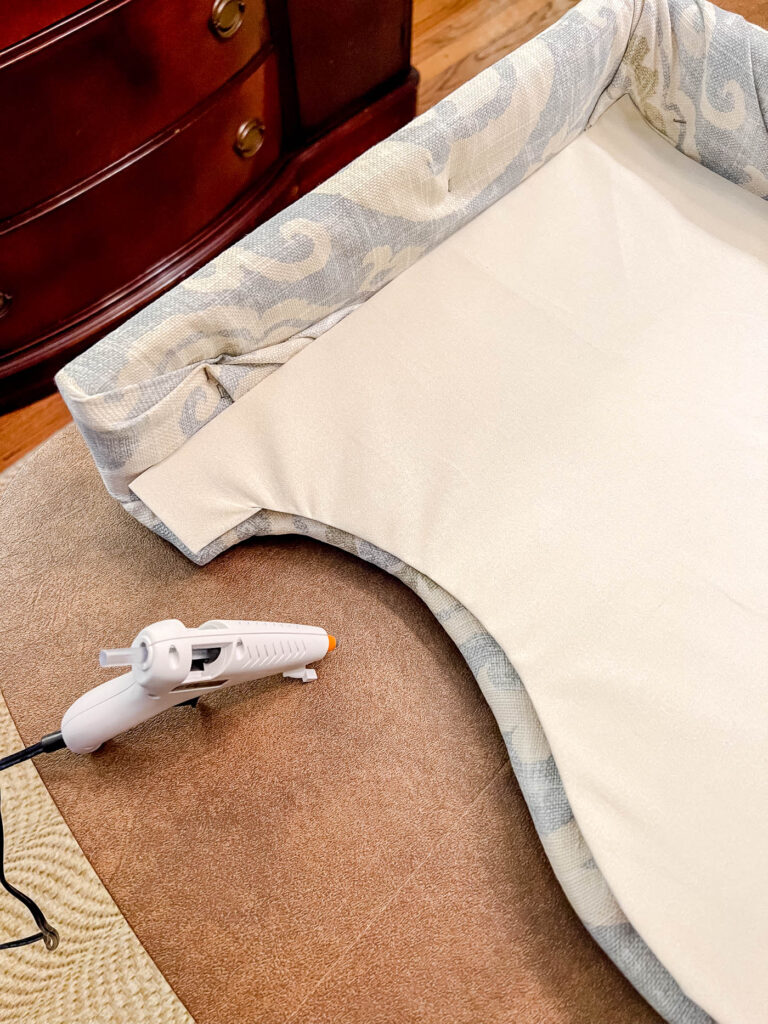
You can honestly hardly see if from the outside of my window. But since my window faces the street, I wanted to make sure it didn’t look bad!
If you choose to, you can add other embellishments to the bottom, front or sides of your board. But I chose to keep mine plain with just the pattern to give it some extra character.
How to Hang a Cornice Board
Once your fabric-covered cornice board is finished, it’s time to hang it above the window. There are a couple of simple ways to mount a cornice board, and I’ve learned that the best method depends on how much space you have between the cornice and the wall.
Step 9: Hang the Cornice Board
You have two good options for hanging a cornice board:
Option 1: Use L-Brackets
The first option is to mount two L-brackets to the wall and set the cornice board on top of them. Then, drive screws up through the brackets and into the top piece of the cornice board to secure it in place.
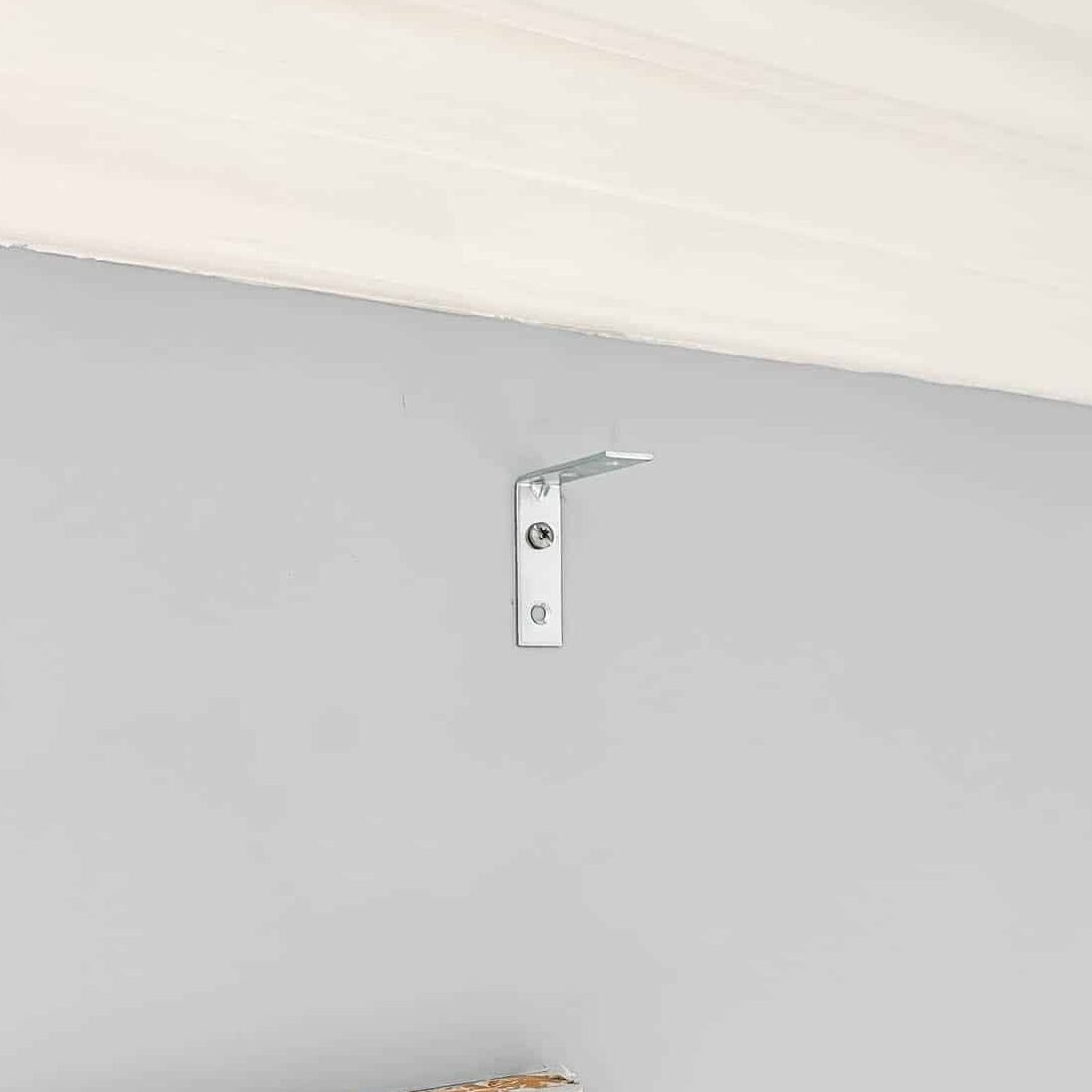
This is the method I used for my cornice board. Whenever possible, attach the brackets to wall studs or use appropriate wall anchors to make sure the cornice is securely mounted.
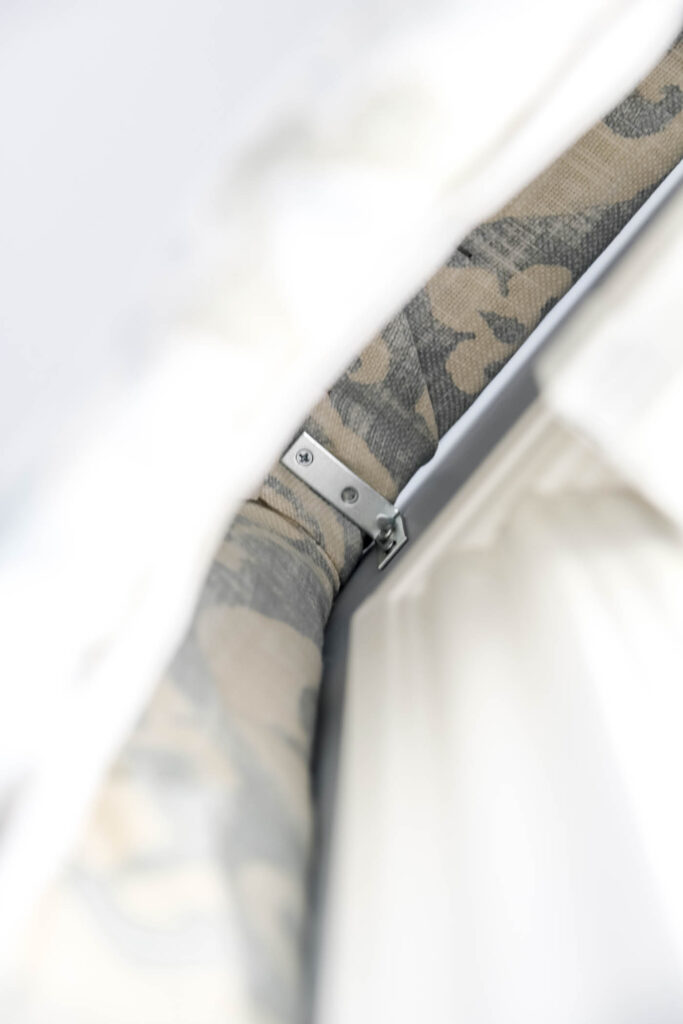
Option 2: Use D-Rings
Another option is to attach heavy-duty D-rings to the back of the cornice board. Then, install properly anchored screws in the wall and hang the cornice much like you would a heavy piece of art.
Looking back, this is probably the method I would use if I made this cornice board again!
My cornice only projects about 3.5 inches from the wall, which didn’t leave much room for my hand and drill when I tried to secure the screws underneath. It worked, but it was definitely a tight squeeze.
So, now I know! Next time, I’d either make the cornice a little deeper or choose a hanging method that doesn’t require getting a drill underneath it.
But isn’t she a beauty? I just love how it turned out!
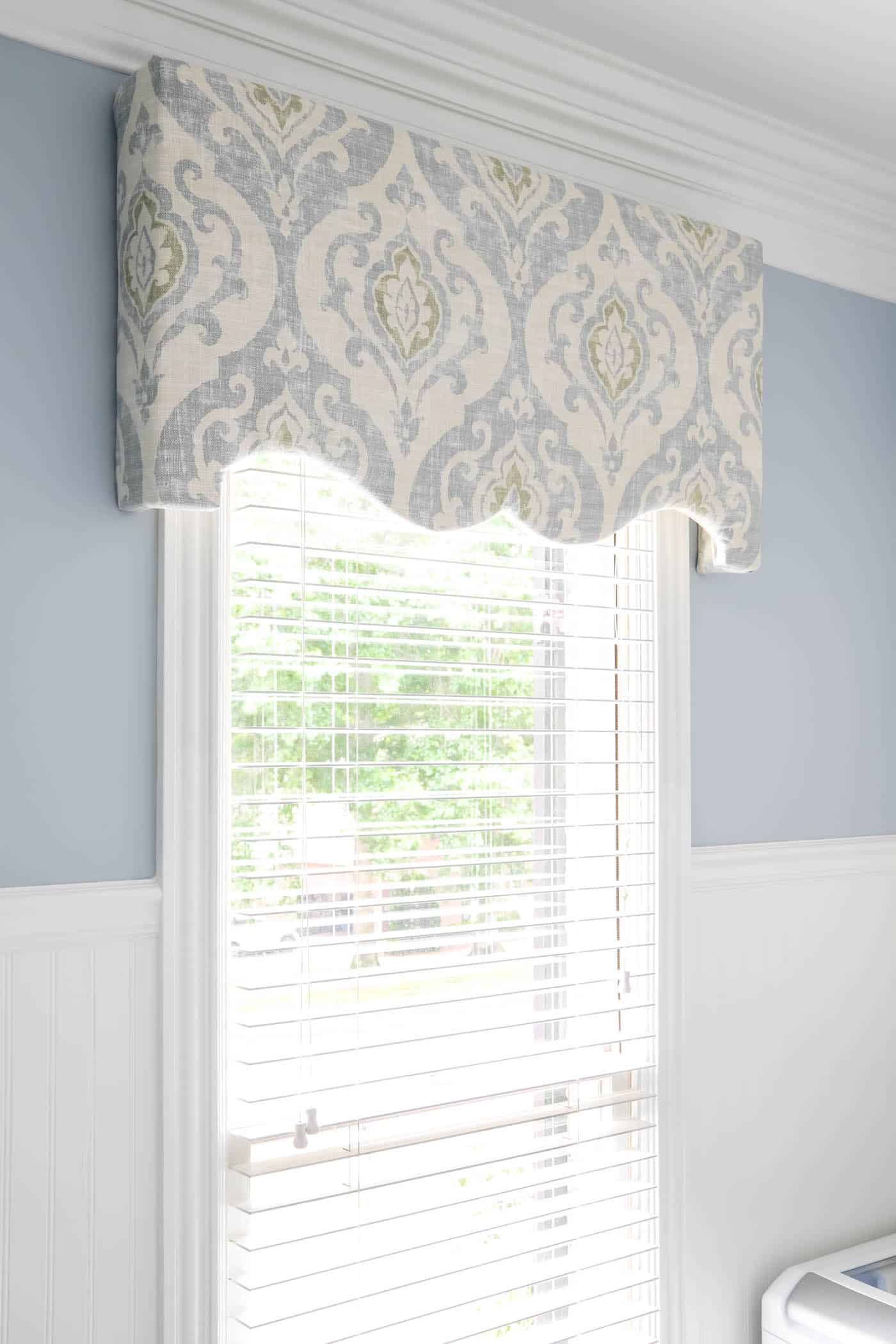
Now that your cornice board is complete, you can sit back and enjoy your work. Or walk by the room every chance you get to steal another glimpse of it, like I do!
Tips for Making Your DIY Cornice Look Professional
- Center patterned fabric before stapling. Pay attention to the center point of your design so the finished cornice looks balanced.
- Keep consistent tension. Pull the fabric snug as you staple, but don’t pull so tightly that the pattern becomes distorted.
- Trim bulky batting. Removing excess padding from the back and corners makes it easier to create crisp folds.
- Make relief cuts around curves. Small cuts allow the fabric to wrap smoothly around inward curves without bunching.
- Take your time with corners. Fold them neatly just like you’re wrapping a gift.
- Finish the back if it’s visible. If the window can be seen from outside, covering the back with inexpensive fabric gives the project a much more polished finish.
DIY Cornice Board FAQs
How wide should a cornice board be?
A cornice board should typically be about 4–6 inches wider than the window, including the trim. This allows it to extend about 2–3 inches beyond each side of the window for a finished, balanced look.
How deep should a cornice board be?
Your cornice board needs to be deep enough to clear the window trim, blinds or shades underneath it. Mine projects about 3.5 inches from the wall, but I’d make it a little deeper next time to give myself more room for installation. Or, I would use a different hanging method.
How tall should a cornice board be?
The height will depend on the size of your window and the look you want, but it should be tall enough to hide your blinds, shades or curtain hardware without covering too much of the window. My cornice board is 19 inches tall, which worked well with the proportions of my window and the crown molding above it.
I followed the same “high and wide” rules of decor that I use when hanging curtains, which is that we want to extend the cornice board high enough above the window casing that it almost reaches the crown moulding. And then covers the hardware for your blinds or shades. So, my cornice board is 10 inches above the window casing and covers only 9 inches of the actual window.
What kind of wood should I use for a cornice board?
I used ~3/4-inch plywood for the front of my cornice board because it’s sturdy while still being easy to cut into a decorative shape. For a simple rectangular cornice, plywood is an easy and budget-friendly choice.
What is the best fabric for a cornice board?
Look for a medium-weight upholstery or home decor fabric that’s sturdy enough to pull taut without stretching or becoming distorted. If you’re using a patterned fabric like I did, choose a pattern that’s easy to center and keep straight across the front of the cornice.
Do you need batting for a fabric-covered cornice board?
You don’t technically have to use batting, but I recommend it for an upholstered cornice board. Batting adds a little softness and padding underneath the fabric and gives the finished window treatment a more polished look.
How do you hang a cornice board?
You can hang a cornice board using L-brackets secured to the wall or attach heavy-duty D-rings to the back and hang it on properly anchored screws. I used L-brackets for mine, but I’d probably use D-rings next time because my shallow cornice didn’t leave much room for a drill underneath.
Can you make a cornice board without a jigsaw?
Yes! If you’re making a simple rectangular cornice board, you don’t need a jigsaw to create a decorative shape. I used a jigsaw because my Pennsylvania-style cornice board has a curved design along the bottom edge.
What’s the difference between a cornice board and a valance?
A cornice board is a structured window treatment with a solid frame, while a traditional valance is usually made from fabric that hangs or drapes above the window. A fabric-covered cornice gives you the softness and pattern of fabric with the more tailored shape of a cornice.
Final Thoughts
will most definitely be making another DIY cornice board! It was easy and budget-friendly, makes a huge statement, and I LOVE how it turned out.
I originally made this one because I wanted to bring some color and pattern into our laundry room without adding curtains that would get in the way. A fabric-covered cornice ended up being the perfect solution; and it gave this little window so much more personality!
I’d love to make cornice boards for both of my girls’ rooms next. They each have a single, smaller window that could use something fun to dress it up, and this is such an easy way to customize a window when traditional curtains don’t make sense.
If you’ve been looking for a simple way to add color, pattern or character to a window, I hope this tutorial gives you the confidence to try making your own. It’s one of those DIY projects that looks much more complicated than it actually is… and nobody has to know you whipped it up in the garage one afternoon!
Thanks for this article. It will help me get going on some cornice boards for our kitchen and family room. could help notice that you had leftover 2x4s to use but then looks like you used 1 bys.
You’re right!! I did use a 1 x 4 board, not a 2 x 4 board. I’ve updated the post to reflect that. Sorry if it caused any confusion!! – Laura
Very pretty. I made cornice boards for the windows in my daughter’s room in the late 1970s. We had similar windows to yours, but ours were over a hundred years old! Good traditional design just needs an updated fabric to work in an updated home!
I’m going to try this in August! I’ve been looking for these instructions all over the place. Thank you for making it so clear!
Oh yay!! I’m so glad it’s helpful! It’s really so doable and makes such a difference! I need to make two more for my girls’ rooms! xo, Laura
Looks great – nicely explained too 🙂 did you ever do the countertops? (you mention this isn’t done yet in your list of things you’ve completed). I’d love to see that video 😀
Hi,
Yes! Here is a link to the post about it: https://theturquoisehome.com/how-to-paint-diy-marble-countertops/
It looks beautiful!
Thank you, Amber!