
Sherwin Williams Shoji White (SW 7042): Undertones, Real Rooms & Color Comparisons

Shoji White (SW 7042) is a warm off-white that can look creamy or more greige depending on the light and the colors beside it. I painted my office walls Shoji White, where it helps bridge my off-white built-in shelves and whiter trim. Below, I’ll show you how it looks in my space, then compare it with Accessible Beige and other popular neutrals.

This post contains affiliate links for your convenience. See my full disclosure policy here.
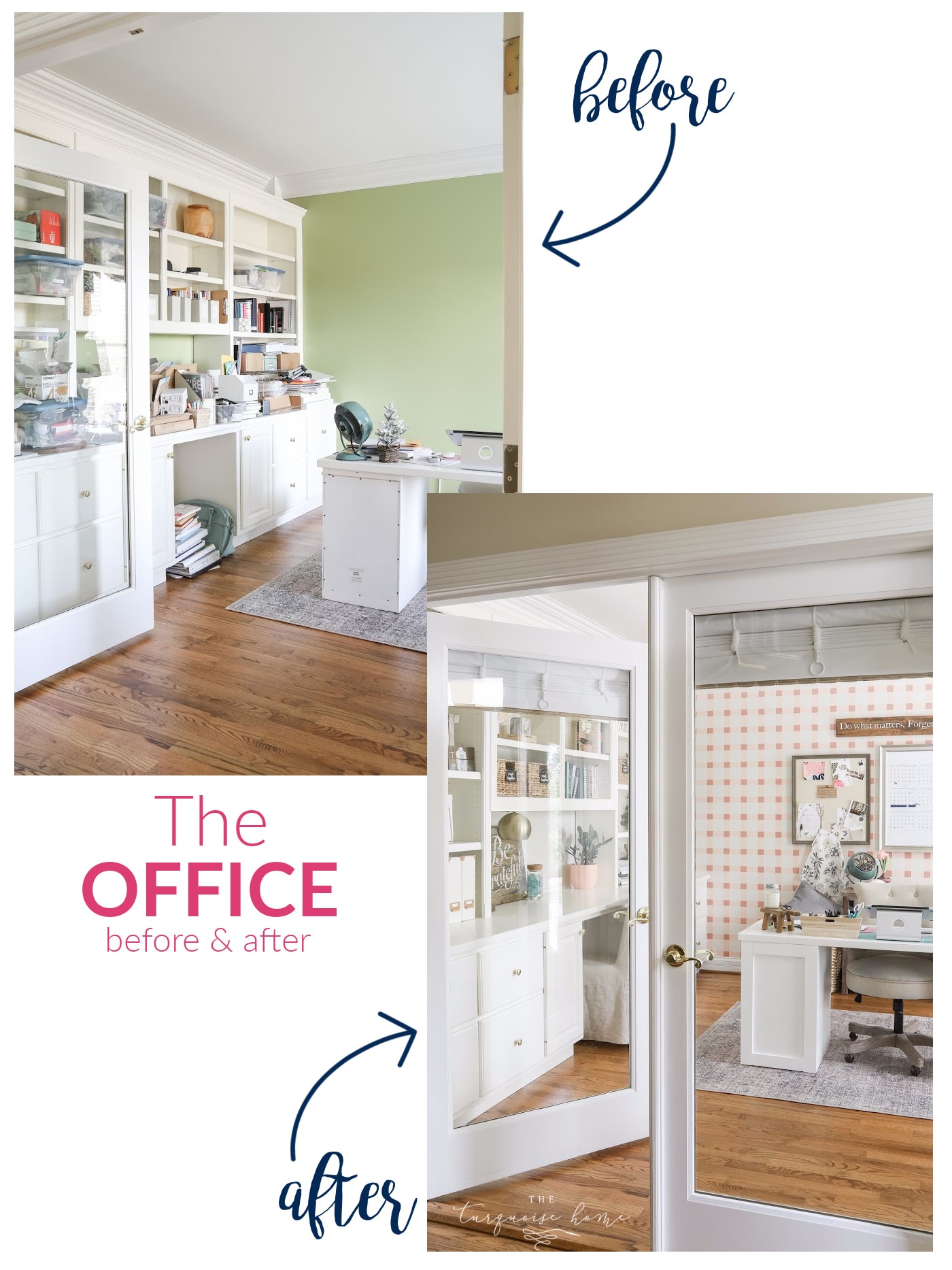
Shoji White In My Office
I painted my office Shoji White and I love that it’s more saturated than a true white, so that it looks like a color. It has a clean, crisp look without being stark, which I’m so happy with!

It was also the perfect wall color to marry my off-white built-in bookshelves with my true white trim.
Scroll through and tap to shop my office:


I’ve since painted the back wall of my office with this cool plaid painted wall treatment. But the light color is still Shoji White, as well as the rest of the walls. And I still love it!


Want to Save This?
Enter your email below and I’ll send it directly to your inbox!
What Color Is Shoji White SW 7042
Shoji White (SW 7042) is a warm off-white with beige and gray influences. It has more depth than a crisp white, making it worth sampling if you want light walls with a little warmth. How creamy or greige it looks will depend on your lighting and the finishes around it.
NOTE: If you’re painting the room yourself, these tools will help tremendously. And this post will give you my best tips for painting a room in 5 easy steps.
PRO Tip
Any time you are choosing a new paint color, you need to try out the real paint color in your home first!
The easiest and quickest way to do that is with Samplize! I solely use them for paint samples now. There’s no mess, no leftover sample pots of paint. Plus, these no-mess, peel-and-stick rectangles made from real paint, are easy to move around the room and easy to save for future reference!
Where to Use Shoji White
- Open Floor Plan Living Space
- Bedroom
- Office
- Nursery
- Entry Way
- Kitchen
- Exterior
Truly, this color can be used in many spaces, depending on the lighting and surrounding finishes!
What Home Style Works Best with Shoji White
It’s a truly versatile color, so it can be used with almost any style, including:
- Farmhouse
- Traditional
- Transitional
- Modern
- Maximalist
- Minimalist
- and more!
Shoji White Undertones
This hue is a gorgeous off-white greige (more beige than gray) that will once in a while pick up a slightly green tone. It is the perfect warm white and looks beautiful with wood or metal finishes.
The ever so slight green undertones can help Shoji White achieve a cozy, warmer feel look when paired with earth tones. Depending on lighting in the room, it can take on a clean white appearance or can even look slightly taupe.
Take the time to sample it and view it in all types of light that will exist in that room because the variations can be very pronounced.
How to Test a Paint Color
One method that I really like to use when testing out a paint color is using a real sample. You can do this one of two ways.
- Samplize offers mess-free, reusable, peel-and-stick real paint rectangles. I’ve ordered many of my favorite paint colors from Samplize so that I can get a good look at the paint on different walls before I fully commit to a color.
- The second method is to order a paint sample pot and paint it onto a piece of white poster board. Leave a white border around the edge of the paint. Then move it around within the space during different times of the day to see how the paint color changes in the different lighting.
Coordinating Colors with Shoji White
Shoji White goes with practically anything, though it does pair with some shades better than others. Since it’s in the orange family with beige undertones, it pairs well with other beige or greige colors. I have it in a room next to another room painted in Edgecomb Gray, and they pair beautifully together. Here are a few more recommendations:
- Pure White (SW 7005)
- Fawn Brindle (SW 7640)
- Perle Noir (SW 9154)
- Worldly Gray (SW 7043)
- Edgecomb Gray (BM HC-173)
- Amazing Gray (SW 7044)
- Intellectual Gray (SW 7045)
- Porpoise (SW 7047)
- Urbane Bronze (SW 7048)
- Iron Ore (SW 7069)
Shoji White vs. Other Neutral Paint Colors
Shoji White vs. SW Accessible Beige
If you love warm neutrals, Shoji White and Accessible Beige are both worth sampling—but they create different looks. Shoji White (SW 7042) is the lighter choice. It reads as a soft off-white, especially in a bright room. Accessible Beige (SW 7036) is deeper and reads more clearly as a beige or greige wall color.

For walls that feel light and airy without looking stark white, I’d start with Shoji White. It’s what I chose for my office, and I love how it sits between my off-white built-ins and whiter trim. If you want more color on the walls, I’d sample Accessible Beige instead.
You can also use them in adjoining rooms. Shoji White can give one space a lighter look while Accessible Beige adds warmth and depth to the next. Before deciding, move samples into both rooms and look at them morning and evening. The lighting and nearby finishes can change how each color appears.
Want a closer look at the deeper option? Read my Accessible Beige paint color review.
Shoji White vs. BM Alabaster
Benjamin Moore’s Alabaster is a very popular paint color, which falls in the white paint category while Shoji White is in the off-white category. When compared side-by-side, it’s obvious how Shoji White reads more beige than greige and Alabaster (BM) comes across lighter, but just as warm.

Shoji White vs. BM Swiss Coffee
While Shoji White reads like a creamy white with beige undertones, Swiss Coffee reads creamy white with slight gray, green and yellow undertones. And Swiss Coffee can read slightly golden in certain lighting. Both are beautiful warm whites that work in most any room!

What is the LRV of Shoji White?
LRV refers to the light reflectance value of paint color on a scale of 0 (pure black) to 100 (pure white). Essentially, colors with an LRV rating close to 0 will be darker (aka absorb more light), while numbers closer to 100 will be lighter colors (reflect more light).
Shoji White LRV is 74.
This number puts it squarely in the off-white category.
So, it’s more like an off-white than a true gray color, which looks best in a room with a mid-range of natural light. If you put it in a room with a lot of natural light, it’ll probably look like a muted white. But if you pair it with stark white trim, you’ll be able to see the contrast.
How SW Shoji White Complements Different Rooms
Reading about undertones can be a bit confounding, so here some actual examples of this gorgeous Sherwin Williams light greige paint in some practical examples. These real rooms show how Shoji White looks alongside different finishes, furnishings and lighting.
Kitchens with Shoji White
Shoji White can be a lovely cabinet color if you want something softer than a crisp white. In this bright kitchen, the wood table, rustic chairs and floors bring out its warmth. Notice how the cabinets still look light, but have a little more color than a bright white would.

And if you’re considering Shoji White specifically for cabinets, take a look at this cabinetry shared by Lauren Liess. The color gives the cabinets a warm, soft finish while still keeping the kitchen feeling bright. Before committing, sample it on a cabinet door and hold it next to your countertop and backsplash; those are the surfaces you’ll see beside it every day.

Bedrooms with Shoji White
In this bright guest bedroom, Shoji White looks soft and light. The white accents give you just enough contrast to see that the walls are a warm off-white rather than a crisp white. If you want that subtle contrast in your bedroom, compare a sample of Shoji White with the white you plan to use for trim or bedding.

In this Sherwin-Williams bedroom, the darker gray furnishings and brighter whites make Shoji White’s beige warmth easier to see. That mix gives the room a cozy feel without making the walls look dark.

Shoji White Bathroom
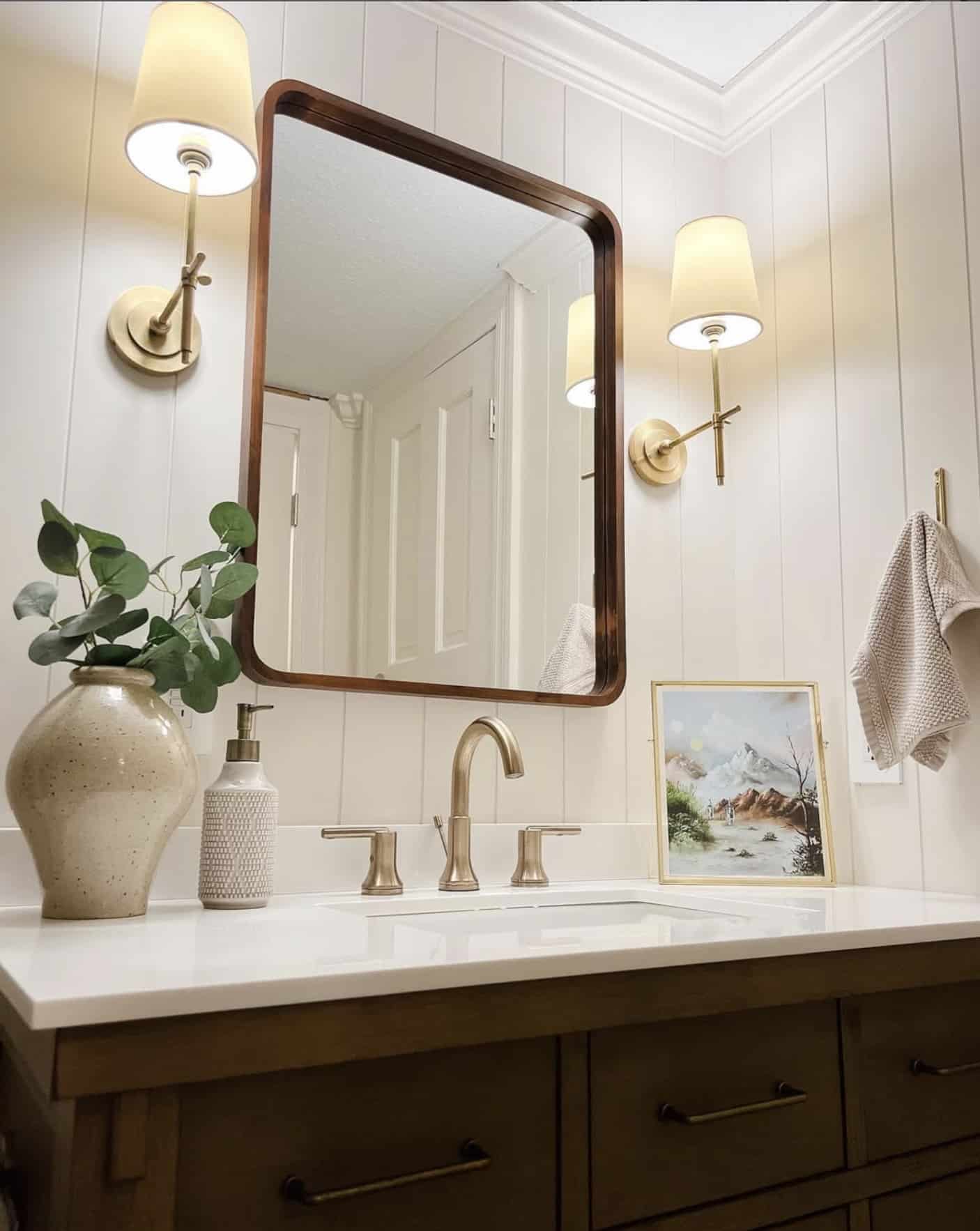
In this bathroom from Kaylee Johnson Home, Shoji White on the paneled walls looks soft and warm beside the white countertop and trim. The dark wood vanity and mirror frame add contrast, making the wall color easier to see. If you’re choosing a warm white for a bathroom, this is a great example of why it helps to compare your paint sample directly with the whites already in the room.
Living Rooms with Shoji White
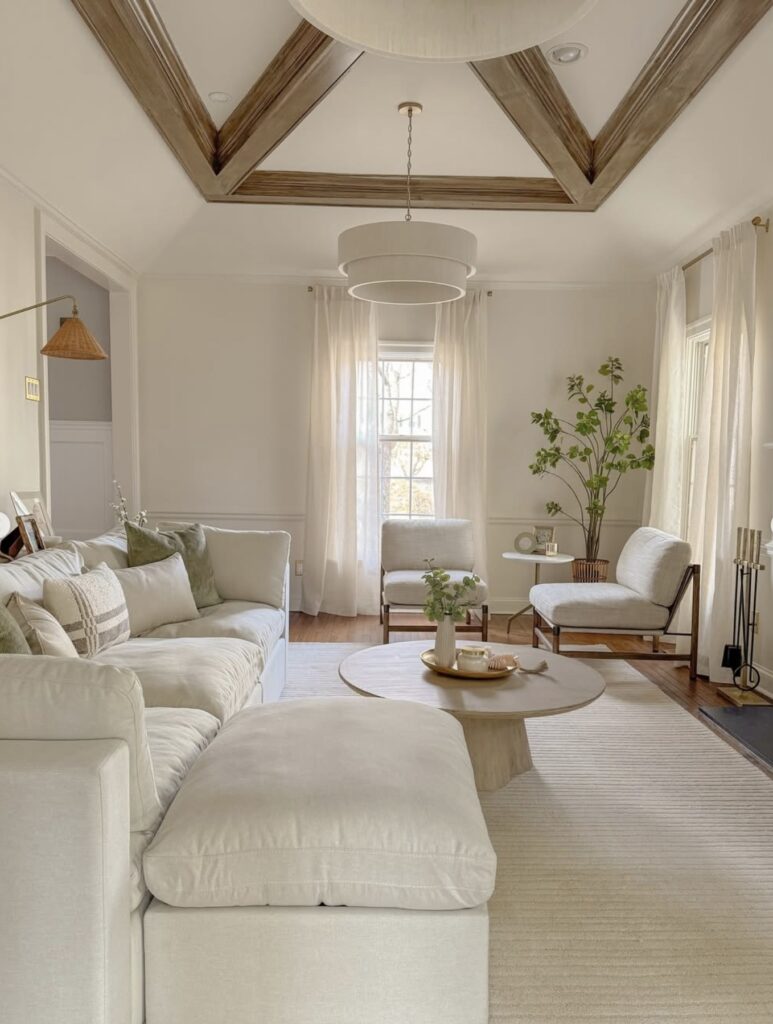
This living room from Get Shelf Help is color drenched in Shoji White, with warm wood beams adding texture and contrast. Using the same paint color across the walls and trim creates a softer, more continuous backdrop, allowing the furnishings and architectural details to stand out.
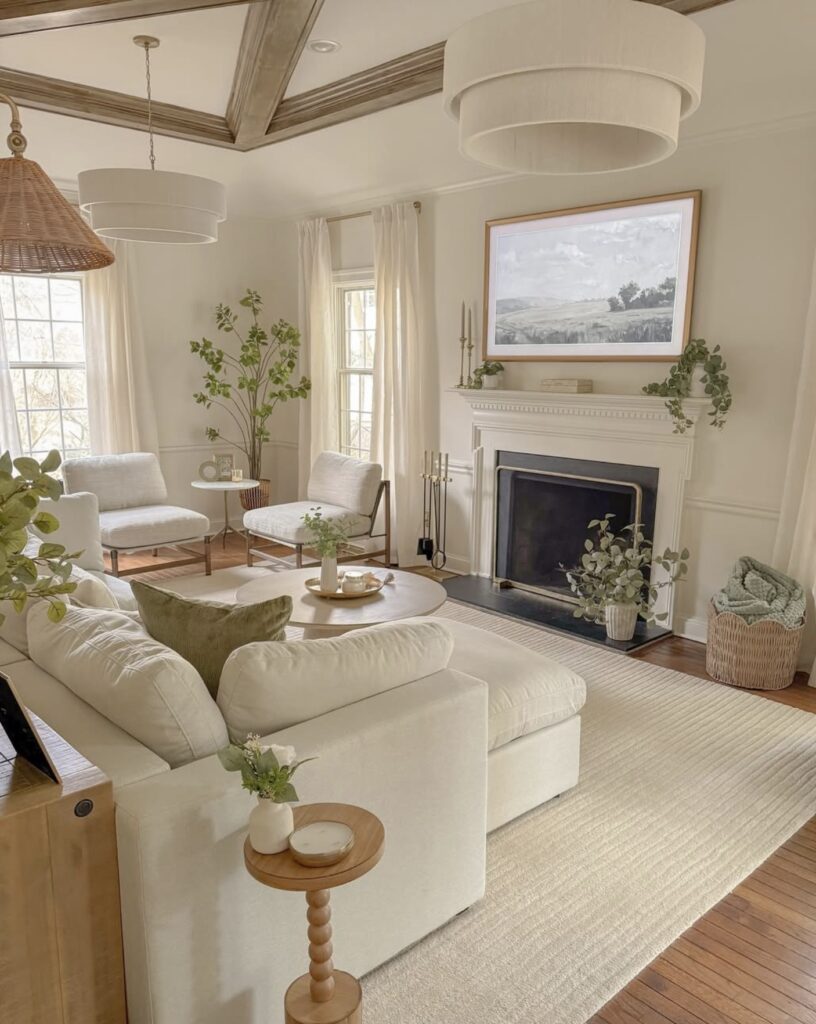
In this formal living room, Shoji White appears closer to white than beige. It’s a helpful contrast to the warmer-looking examples above: lighting, surrounding finishes and even photography can change how a paint color appears. If you want a soft off-white living room, sample Shoji White beside your sofa, flooring and existing trim to see whether it gives you the warmth and contrast you’re looking for.

Shoji White Exterior Paint
Shoji White is worth considering if you want a soft, warm white exterior. Outdoor light can make it appear brighter than it does inside, so test a large sample beside your roof, brick or stone before committing.
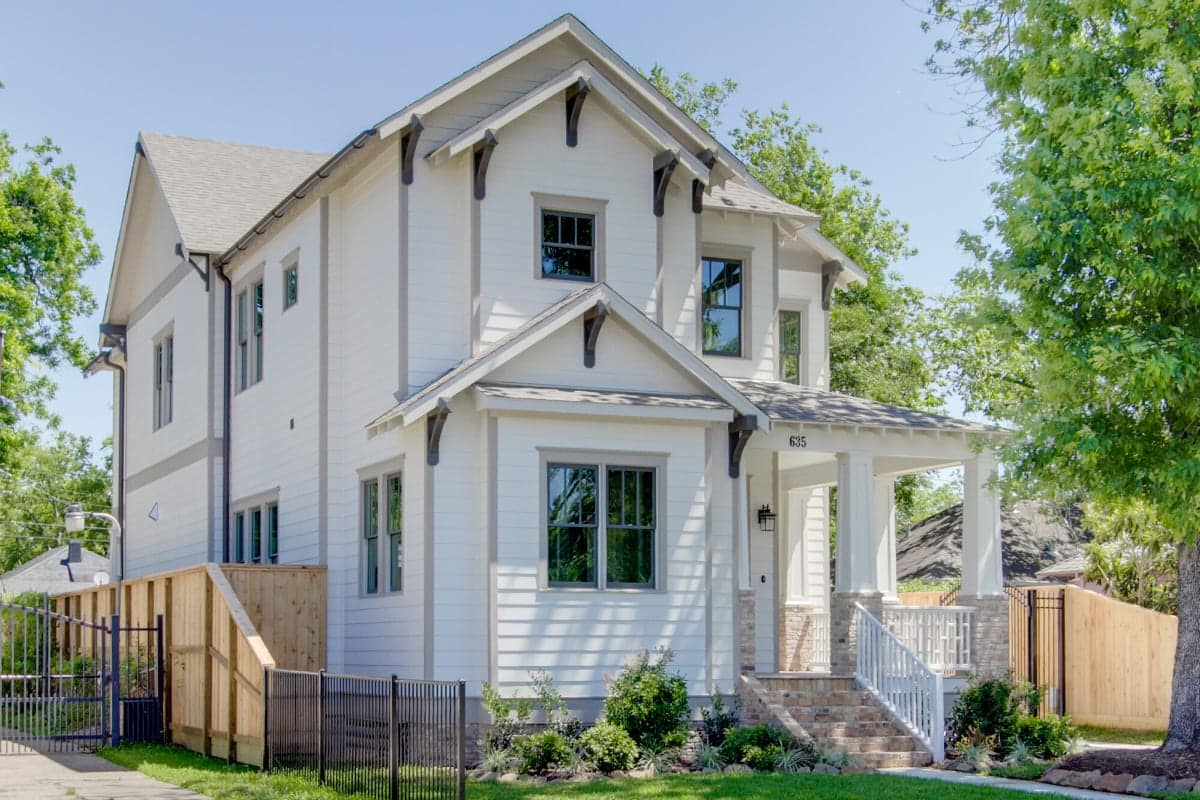
On this Craftsman home from Southern Green Builders, Shoji White siding creates a light backdrop for the Craftsman details. It’s a good example of how a warm off-white can give an exterior a fresh look while still feeling welcoming.
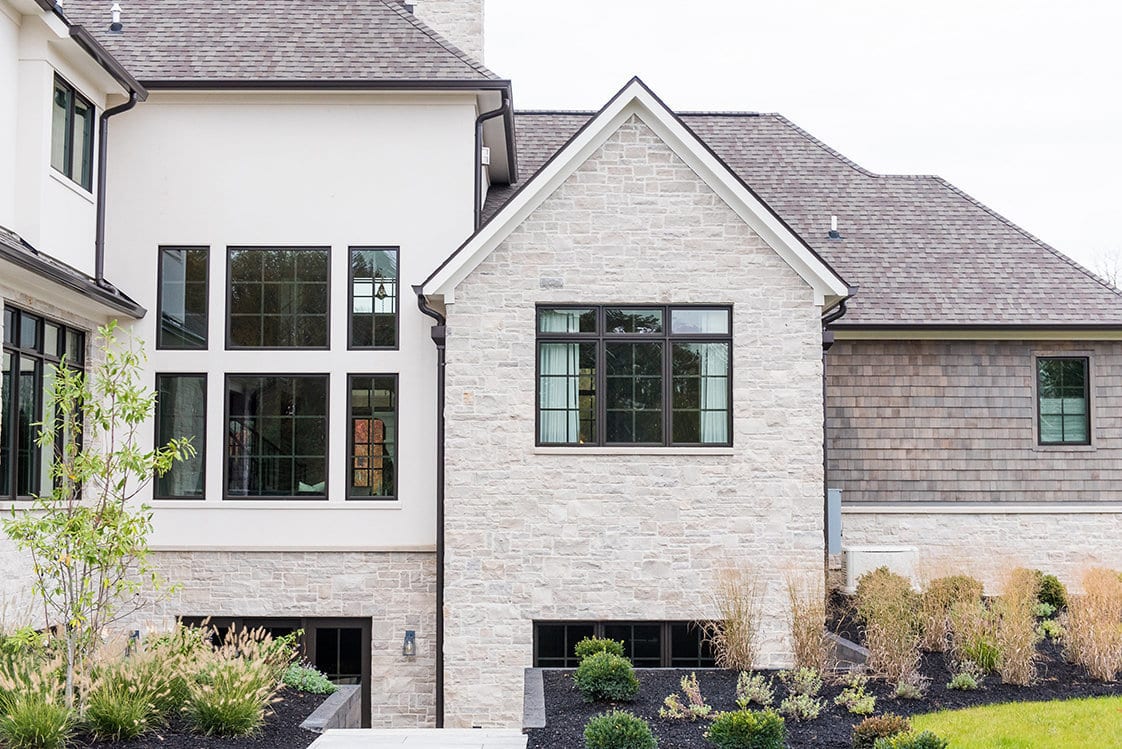
On this home by Whittney Parkinson Design, Shoji White stucco sits beside slightly darker greige stone. The combination shows how a warm off-white can complement natural materials without creating a sharp contrast. If your home has stonework, compare your sample with several stones; their mix of colors matters as much as the overall shade.
Now that you’ve had a chance to look at how well this gorgeous white shade looks in so many different settings, I highly recommend you find a space to paint (and enjoy) this warm, beautiful color.
Don’t forget to check out these other fantastic paint colors!
Tips for Painting a Room Yourself
I’ve gathered some of the best tools for painting a room yourself. First of all, you’ll want to check out this post I wrote: Painting a Room in 5 Easy Steps. These tools are the top tools I use when painting my own rooms, which is how they get painted 95% of the time!
- Paint Brush – These paint brushes are a little more expensive than your basic brush, but they’re worth it! I’ve used these brushes for more than a decade and if you wash them out well after each use, they will last for years.
- Painter’s Tape – a MUST have for taping off edges. You’ll need to tape off all edges if you don’t have a steady hand.
- Drop Cloths – a must have if you don’t have any laying around the house already.
- Paint Cup – Sure you could use any old cup, but I’ve come to swear by this one. The magnetic piece holds your brush cleanly in place when you need to take a break. And it fits my hand perfectly, keeping it from cramping.
- Roller Tray – I’ve found the only paint tray I’ll ever use again. The magnetic piece is great for holding the roller in place. And the liners are a luxury, but I won’t paint without them because it makes clean up a breeze!
Final Thoughts
If you’re looking for a warm off-white with a little more depth than crisp white, Shoji White is worth adding to your sample list. Try it beside your trim and largest fixed finishes, then check it throughout the day. If you want a deeper neutral, compare it with Accessible Beige before making your final choice.
More Posts You Will Love:


Hello. We are currently remodeling our 30 year old home, and expanding my kitchen, all new. We will have rift white oak cabinets, I would like to paint my uppers, was thinking of Shoji White. We are leaving the lowers natural wood. My large island I would like to paint it a green color, would Dried Thyme go with Shoji White? Or do you recommend another green color? Also is it best to paint the walls the same color as the uppers, or another color? Our floors will be a medium oak color, Hallmark Novella Twain Oak.
Thanks for your help. Robyn Featherston
Hi Laura
I the bathroom above, what color did you do the ceiling and trim? Was it shoji whites in a different shein? The trim looked darker. Thank you
Hi Mary, since it’s not my bathroom, I’m not sure of the trim color. But it does look darker than the Shoji White walls, not just Shoji White in a different sheen. Sorry I can’t be more help! xo, Laura
I chose Shoji White for my (restored) original cabinets in the kitchen. I paired it with SW Light French Grey for the walls and SW Slow Green for cab doors and drawer fronts. The house is a mid century (modest) ranch style and I wanted to stay very true to the era of the home with my approach. The flooring will be (hopefully by end of June!) Armstrong VCT tiles in Willow Green with a black border. I’ve waited for the new kitchen for so long, can’t wait for to finish it! But as to the cabinets—they’re back in and completed and I LOVE the Shoji White. It’s simply beautiful!
Your office looks beautiful! I have been thinking of painting my living room Shoji White. I have probably 30 different whites I have pinned on the wall! I would like navy accents so do you think shoji is the right white to go with?
Hi – we recently made a bold choice for the exterior siding with SW Inkwell. We are having a tough time settling on the exterior trim. How do you think Shoji would do up againist such a dark color on the exterior *(facing northeast). Thank you!
I’m a little late to the party but wondering what color did you paint your ceiling along with Shoji White walls?
Hi Laura,
What a great post ! Lovely color. 😊 . We are updating our house . I’m going for a classic, timeless refresh with lighter colors. But our travertine and Brazilian cherry floors must remain. What are your thoughts on Shoji onthe walls? What trim would you pair with it? Trying to neutralize the travertine. Thank you!
Hi Lou
What color did you end of with?
Hi Laura,
I am going to paint my guest bedroom Sea Salt. I have a dresser that I want to paint a “coastal” color. Would you recommend Shoji white or another color for the dresser. Thank you.
I’m falling in love more and more. I’m doing a new build and searching for the perfect warm white throughout. Shoji white fits the bill. I’m wondering, however, if it will work in my kitchen. I’m doing white uppers (possibly Pure White) with Comfort Gray bottoms. Will the blue-green-gray of Comfort Gray work with Shoji White walls? I’m having trouble picturing it.
This post left me with my mouth salivating for this entire post. I love it all! thanks for sharing.
I have Wordly gray and Shoji white in my home office. I really like the shoji white in all the rooms you shared. I may have to take my shoji white into more areas of my house! Great post. .
Hi Laura. This is a beautiful color, and one I had not considered before. Thank you! One question though: how does it work with trim in the kitchen? Is this color enough of a neutral that you could use it for the cabinets while using a more traditional – or a “whiter” white – for the trim that will run through the entire home? I’m not sure if I asked that correctly. And, I noticed the example of kitchen cabinets above. I just want to be careful with the kitchen. One shade of white on the cabinets and another on the trim might look weird – although Shoji White looks like it has enough beige in it to keep the cabinets more of a cream color. Jane.
I think it would be beautiful in the kitchen on the cabinets with a true white trim. That photo above with the kitchen cabinets in shoji white is one of my favorites. It’s enough of a color that it would look like a cream color, and not just a mis-matched white color.
How do you think shoji white would look as an exterior color with white trim?